


Dim Sum for Dummies
Eating dim sum has become the number one weekend activity. But usually we play it safe when ordering. Simply because we don’t know what’s what. And, above all, what’s in it. With the Hong Kong Dim Sum – A survival guide, you can order like a true Hongkonger.

There are two types of menus in Chinese restaurants. One for gweilos (foreigners) and one for Chinese people. You’ll often see dishes appearing on Chinese families’ tables that you don’t recognize from your picture menu. The best option is to bring a Chinese-speaking dining companion. The second-best option: a decoder for Chinese foodlingo.
Expert by experience
Liza Chu started working in her parents’ Hong Kong restaurant at the age of thirteen. So she knows what she’s talking about. After studying in Australia, she eventually began working in Hong Kong as a teacher of Cantonese language and culture to American expats.
To conclude each course, Chu took her students to a dim sum restaurant. Because nobody dared to order for themselves, she decided to create a visual survival guide, with explanations of the ingredients. After all, Westerners are rather scared of offal and other creepy things.
Chinese table manners
The handy little guide begins with a brief explanation of dim sum’s uncertain origins (northern or southern China), followed by Chinese table manners (washing your own tableware at the table with the tea served as soon as you sit down), chopstick and payment etiquette (between Chinese people, pushing and pulling often breaks out because everyone insists on paying the bill) and an overview of the types of tea most commonly served with dumplings.
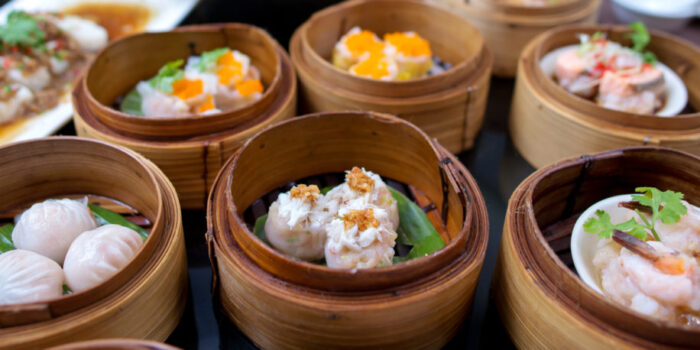
Traditional dim sums such as pai gwat (pork ribs in black bean sauce), siu mai (pork dumpling) and au jup (offal) are featured in photographs accompanied by brief explanations of the ingredients and texture. But so are less traditional options such as sweet deep-fried milk balls (jar lai kau). Icons also make it clear whether they contain meat, nuts, eggs, shellfish or pork.
Cantonese vs. Mandarin
Liza Chu also promises to help you with the pronunciation. She even teaches you a few simple sentences. But ‘Oo sik jai ga’ (I’m a vegetarian) sounds very different with an American accent than it does with ours. The photos are therefore the most reliable aid. Also on mainland China, where they speak Mandarin rather than Cantonese.
Read also:


