



Everything you need to know about mushrooms
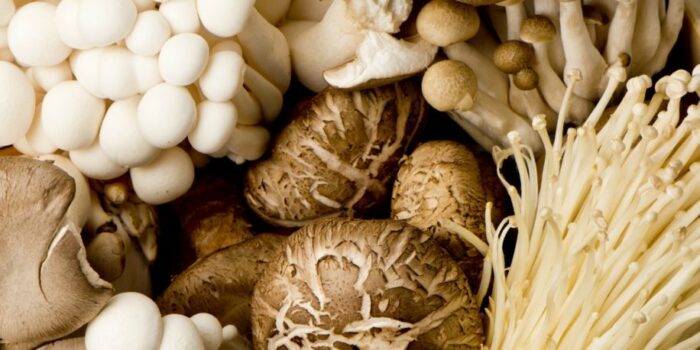
Mushrooms come in hundreds of shapes and sizes. Most of them are highly poisonous, while some are edible. As you can imagine, we’re naturally only interested in the edible varieties. Below, we’ll explain the ins and outs of edible mushrooms. Burning questions such as ‘how do you recognize a shiitake?’ will be answered.

Mushrooms, big or small, a fungus has never been so fine — it should be a saying.
Characteristics
A mushroom is a fungus. Fungi are so-called eukaryotic organisms that together make up the kingdom of fungi. Mushrooms generally thrive best in damp, dark places. So the forest or your old, filthy basement is where they feel most comfortable.
Flavor
These little umami bombs brighten up many a dish. Besides ‘umami’, the flavor of mushrooms can be described as ‘earthy’. And an earthy touch rarely goes amiss in a dish.
Expensive?
A pack of supermarket button mushrooms costs next to nothing, of course, but there are also incredibly expensive mushrooms. Some fungi cannot be cultivated, meaning you can only pick them in their natural habitat. As you can imagine, if you have to travel to the other side of the world to pick the mushroom of your dreams, it’s allowed to cost a bit more. Chanterelles, for example, cannot be cultivated and are therefore considerably more expensive than button mushrooms.
Buying mushrooms: the five best-known varieties (and how to recognize them)
First of all, never simply pick mushrooms and certainly never put them straight into your mouth. I already said it: mushrooms can be poisonous. People have died after eating poisonous varieties. So don’t. But once they’re in the supermarket or at the greengrocer’s, you can assume that they’re safe to eat. Always choose specimens that look attractive and undamaged. Avoid fungi with wet spots on the cap.
These are the six best-known varieties and this is how you recognize them:
Button mushroom
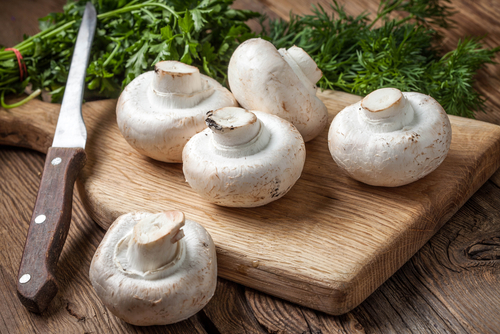
The button mushroom is a staple in many a kitchen. In omelets, stirred through risotto, in creamy pasta sauce or as a side with your steak, the button mushroom is everyone’s friend. Most people recognize button mushrooms only by the blue container they come in. You can also recognize them by their white, rounded caps. Cremini mushrooms have light-brown caps.
Shiitake
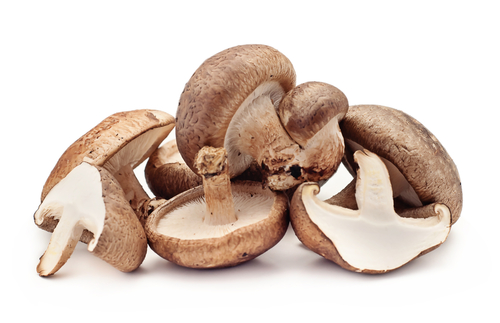
The Asian sister among mushrooms. It naturally grows in Japan and China, but nowadays it is also cultivated in large quantities in Europe. This Asian mushroom has a (dark) brown cap. In young shiitakes, the edge of the cap is rolled slightly inward.
Morel
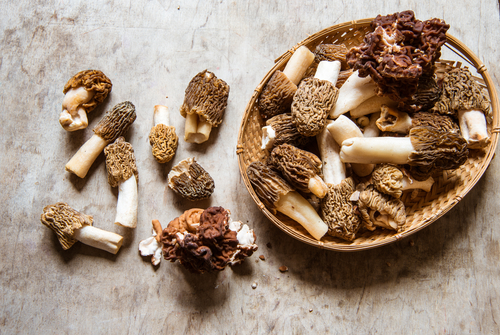
A gem of a mushroom, if you ask me. A pure flavor bomb. Add this mushroom, which looks like a shriveled sponge, to any dish and it’s instantly next level. Just make sure you always cook it thoroughly — raw morels are poisonous.
Porcini
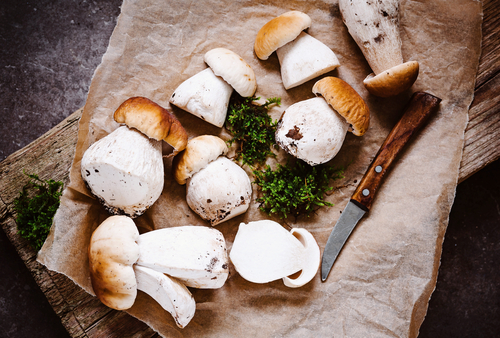
Also known as porcini or cèpes. Besides winning the award for mushroom-with-the-funniest-name, this fungus is also incredibly tasty. It has a slightly nutty flavor. The cap ranges from reddish brown to dark brown, and the stem is often thick.
Portobello
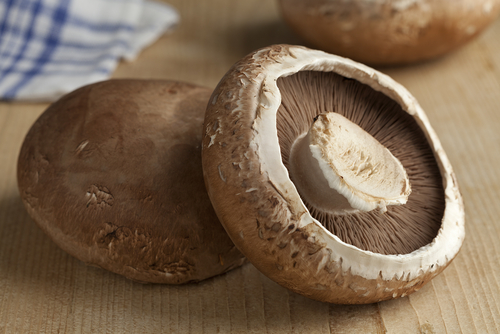
People make unnecessarily big claims about portobellos, because they’re actually nothing more than a very large cremini mushroom. The cap can reach 12 centimeters in diameter. That is impressive, to be fair. So you recognize it by its size.
Besides these five, there are countless edible varieties. Ever heard of trompette de la mort (also known as horn of plenty)? Anise mushrooms? Enoki? Every one of them is delicious.
Storage
Generally speaking, you can’t store mushrooms for very long. So buy them as fresh as possible and eat them straight away. If they do end up sitting for a few days in your refrigerator, don’t put them next to strongly scented foods such as leeks and cheese. Mushrooms absorb odors easily.
Cleaning
When cleaning mushrooms, there’s one key word: gently. You never wash them, because they absorb water. And you don’t want to chew on soggy, watery mushrooms. Fortunately, you don’t have to, because the solution is simple: wipe them clean. You can buy special mushroom brushes, but a clean tea towel or simply a piece of kitchen paper will do the job just fine.
Cooking: don’t crowd the mushrooms
Fungi naturally consist largely of water, so mushrooms contain a lot of moisture. When you cook them, that moisture is released. If the mushrooms are packed too closely together in your pan, the moisture cannot evaporate as quickly or effectively. As a result, your mushrooms are essentially steamed rather than fried. So if you want beautifully browned mushrooms on your plate, don’t cook too many at once.
Read also:


