Ferment Your Rot
A new book about the benefits of rotting processes in the kitchen. Rot tastes better than you might think: yoghurt, cheese, beer, sauerkraut, pickles—it’s all “rotten.”

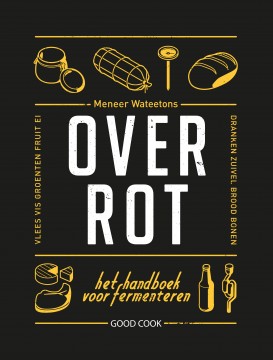
Fermentation is hot. Last summer, a kimchi festival was held in Amsterdam, where the queue for a plate was a good two hours long. Kimchi? Yes, the fermented cabbage and vegetables (originally a Korean recipe) that every self-respecting restaurant is experimenting with. Fermentation is the food trend. Mr. Wateetons explains this trend and everything that comes with it flawlessly in his new book Over Rot – the handbook for fermentation.
Fermentation is a magical rotting process. “Fermentation is war,” says Mr. Wateetonsons. Bacteria, fungi and yeasts are heroes in Mr. Wateetons’ eyes, while disease-causing microbes are the enemy. A decomposition process with microorganisms as combatants. And it goes further than just kimchi. Yoghurt, cheese, beer, sauerkraut, pickles—it’s all “rotten.”
Home fermentation cabinet
Mr. Wateetons guides the reader through the entire fermentation process with a firm hand. It starts by describing the supplies you need as an aspiring fermenter and building your own fermentation cabinet. He does this with the almost scientific precision we already know from his earlier, thorough handbooks on Sausage and Over Smoke. In between are useful overviews, such as a list of the most important disease-causing bacteria. Always good to know. Because experimenting with fermentation is not without risk. Mr. Wateetons quotes Snoop Dogg to emphasise how dangerous these enemies can be: “Ten million ways to die, choose one’.
Airlocks, pH meters, glass preserving jars and thermometers. Everything at home? Then it’s time for the real work. En garde. Get started with vegetables, dairy and grains, process the products with, for example, brine, and put everything into the glass preserving jars, after which the great wait begins. Wondering how long? The pH value of your brew will tell you. Measuring is knowing. Each preparation indicates what the pH value should be, so you don’t give the enemy a chance. Above a certain pH value, the dish becomes toxic. You measure the pH value with simple pH strips, which you can buy from webshops or cookery shops.
Basic principles
Fermentation is only suitable for patient people, and so is this book. Because you need to sit down with it for a while before you grasp the basic principles of better fermentation. But the wait is rewarded with, for example, mighty miso, simple to make but oh so complex in flavour. Or cider, sauerkraut and, yes, kimchi. The book is packed with accessible do-it-yourself fermentation recipes, but also offers various fermented dishes that you can make without having to wait three weeks first. For example, the salad with pear and blue cheese from the supermarket. But after reading this book, we know one thing for sure. You won’t want to buy pickles anymore; from now on, you’ll make them yourself.
Over Rot – the handbook for fermentation
Mr. Wateetons
€ 29.95
Good Cook