


Sourdough Starter for Lazy People
A good sourdough starter is every baker’s dream. It’s a simple mix of flour and water, but you have to feed it daily and it takes about a week before it’s ready. With these shortcuts, you can make a similar starter, but much faster.

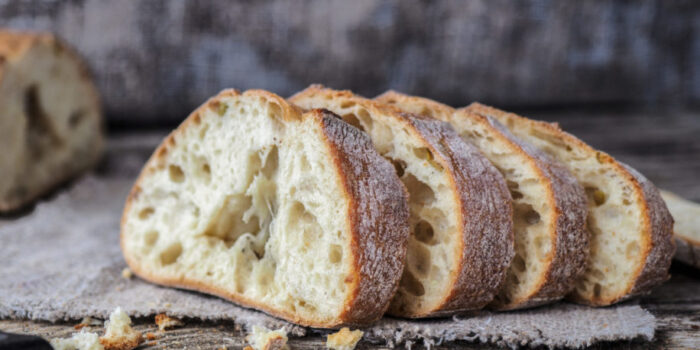
A crispy crust and an airy interior—I think we can all agree that’s the perfect bread. Fermentation is needed to achieve that. Adding yeast to dough makes it ferment and rise. Another way to start this fermentation process is with sourdough. That’s a mix of flour and water that ferments naturally. A sourdough ‘starter’ gives the fermentation process a head start and also adds extra flavor.
Italian biga, French poolish
If you want to bake bread, you usually want to do it right away. If you already have a sourdough starter, great, but what if you don’t and still want the same effect? Then make an Italian biga or a French poolish. These are similar starters, but with a very small amount of yeast, which means they’re ready to use more quickly. Compared with using yeast alone, the advantage of a biga or poolish is that it gives the finished bread much more aromatic flavor.
How do you make it?
Biga and poolish are basically the same, but they differ slightly in hydration and therefore in firmness. A poolish is always 50 percent flour and 50 percent water. To make one, mix 200 g flour, 200 g water and 1/4 tsp dried yeast (really use measuring spoons for this) in a container with a lid. The container should be large enough for your poolish to double in volume. Place the lid loosely on the container; the starter still needs to be able to get some air.
Leave it for 12 to 16 hours, until it’s full of air and the starter has doubled in volume. Start checking after 12 hours. You can then use the starter in your bread. For a biga, do exactly the same, but use 35 to 45 percent flour and 65 to 55 percent hydration (160 g flour to 90 g water, for example). Once you’ve got the hang of it, start with your first ciabatta!
Read also:


