


5 Indonesian Vegetable Salads
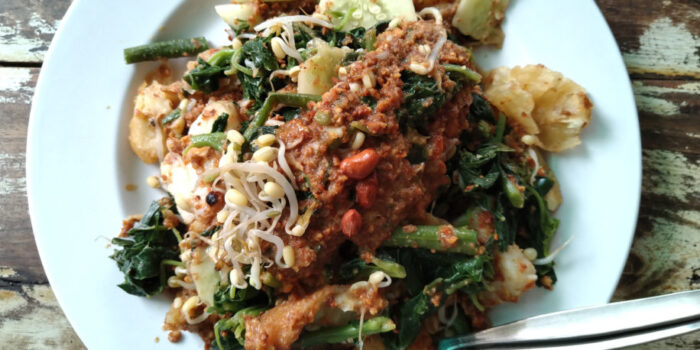
Crazy about Indonesian cuisine? Then there’s a good chance you’re already familiar with gado gado and pecel. But have you ever heard of lotek, karedok and ketoprak? These less popular vegetable salads are just as easy to make, yet completely different in flavour.

Indonesian vegetable salads look quite similar at first glance. They consist of various vegetables mixed with a sauce (boemboe katjang) made with peanuts and spices, served with prawn crackers. But still: that peanut sauce is prepared in a completely different way for each salad, and the ingredients that are not always immediately visible also differ enormously.
1. Gado gado
Gado gado, meaning ‘mixed’, originally comes from West Java. The peanut sauce is slightly thicker because of the coconut milk, lightly sweet from the gula djawa and ketjap manis, and mildly spicy and pleasantly sour from the tamarind and lime leaves. Traditionally, it contains blanched green beans, raw pointed cabbage, bean sprouts and cucumber, tahoe (tofu), boiled potato and boiled egg. Gado gado is served with emping melindjo, crackers made from the peeled seeds of the melindjo tree.
2. Lotek
Lotek from Yogya, Central Java, resembles gado gado, but is made exclusively with blanched vegetables. Sometimes these are supplemented with soybeans and carrot, but there is no boiled potato or egg. The sauce is mildly spicy, but thinner and less sweet because it contains neither ketjap nor coconut milk. It is still thickened by the boiled potato in the boemboe. The aromatic flavour comes from kentjoer root (related to ginger). Lotek is usually served with kroepoek gendar, made from rice flour.
3. Karedok
Unlike the other Indonesian vegetable salads, the vegetables in West Javanese karedok are raw. This salad is also known as lotek atah (raw lotek). It is made with cucumber, bean sprouts, small pea aubergines and cabbage with fragrant kemangi (lemon basil). The sauce is spicy, somewhat thicker and less sweet, but is prepared with ketjap manis and gula djawa.
4. Pecel
The sauce for pecel from Madiun (East Java) contains more lime leaves, two types of chilli, shrimp paste and kentjoer. Since no coconut milk, ketjap sauce or tamarind are used, and chillies are added, this is the spiciest sauce. The vegetables in this salad are also all blanched. Pecel is served with fried tempeh and rempejek, spicy peanut crackers.
5. Ketoprak
Ketoprak comes from Jakarta and is the heaviest, most filling salad. It consists of cubes of lontong (steamed sticky rice), fried tofu, cabbage, rice vermicelli (thin rice noodles), bean sprouts and crackers. In general, this salad contains fewer vegetables. The sauce is made with peanuts, gula djawa, chillies, garlic and a sweet, thick soybean sauce.
Make it yourself?
These vegetable salads and the boemboe katjang are made completely fresh by Indonesian street vendors right in front of you, then mixed with the fresh ingredients. It is an inexpensive meal and very popular in Indonesia. In Amsterdam – and, on request, in other places in the Netherlands too – I organise cooking workshops and private workshops at your home, where you learn all about Indonesian cuisine and dishes such as gado gado, lotek, karedok, pecel and ketoprak. Want to stay up to date or join in sometime? In the meantime, make the ultimate boemboe for your homemade gado gado.
Also read:
- 7 of our favourite Indonesian snacks
- Favourites on the Indonesian rijsttafel
- Stocking the pantry #9: Indonesia


