



5x ways lemons are your household lifesaver
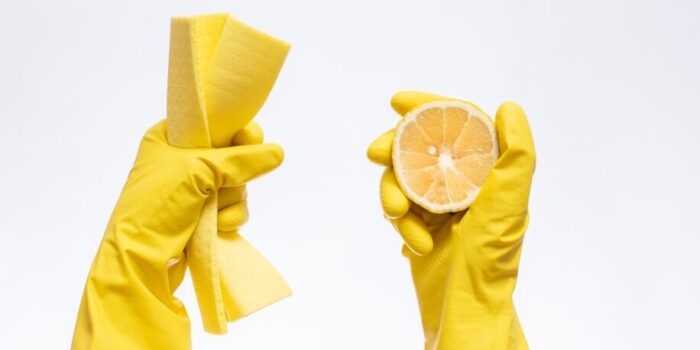
Anyone who thought lemons were only a life saver when doing a tequila shot is mistaken. You can also do so much with them around the house. Much more than you probably think. We’re giving you 5 household hacks in which the lemon takes center stage. Because when life gives you lemons, you do your household chores with them.

Halved lemons in the dishwasher
A packed dishwasher, every single day? The more often you wash glasses, the duller they eventually become. Such a shame. Luckily, there’s the lemon, which makes your glasses shine again. A lemon in your dishwasher works as a rinse aid. The acid in the lemon removes limescale. What’s more, it also makes your dishes smell lovely. Here’s how: cut a few lemons in half, squeeze out the juice (don’t throw it away—you can always use it!) and place the lemon halves in the dishwasher among the dirty dishes. It’s smart to secure the lemon peels in the upright plate rack. That way, the peels won’t move around while the dishwasher is running. Turn on the dishwasher as usual, wait until the dishes are done and marvel at the result.
Rub half a lemon over your oven
The longer and more often you use your oven, the dirtier it gets. Water splashes, greasy fingerprints… It doesn’t look great. But here too, the lemon is the perfect solution to your problem. Here’s what to do: cut a lemon in half and rub one half over the dirty spots on your oven. Let the lemon juice sit for 5 minutes, then remove it with a damp microfibre cloth. Finally, dry it with a clean tea towel. That’s it! The citric acid makes limescale and grease deposits disappear from the oven. Another plus: the lemon removes bacteria that have accumulated on your oven. You can also use this lemon trick on all kinds of stainless-steel surfaces. It works on your stainless-steel tap, for example. Ideal, if you ask me.
A lemon in your kettle
I’m a real tea lover. My kettle is on all day long. The result: limescale builds up on the bottom incredibly quickly. That’s why I think this hack is brilliant: a lemon in your kettle. The citric acid removes all the limescale that has developed on the bottom. What do you need to do? Fill your kettle with about a litre of water. Cut a lemon into about 6 or 7 slices and put them in the kettle. Turn on the kettle so the water boils. Then wait about half an hour. You’ll see the limescale gradually loosen from the bottom. Afterwards, throw away the lemon slices and water, rinse the kettle several times and you’ll see that the appliance is once again virtually free of limescale. Super simple, but very effective.
Half a lemon with baking soda over your stovetop
This trick finally gets rid of those horrible rings on your induction hob. You know the ones, the rings that appear when your pan of water boils over (you can prevent that with this trick, by the way!). Here’s what to do: dip half a lemon in plenty of baking soda and rub it over the rings on your induction hob. Squeeze the lemon as you go so the juice and baking soda mix well. Leave it to work for a while, wipe it off with a cloth and voilà! You can cook on a ring-free stovetop again.
A bag of lemon peels by the garden door
Crawling ants: just the thought of them makes me itch. Of course, they’re welcome to crawl around in the garden. But that’s where they can stay as far as I’m concerned. So how do you stop ants from coming inside through the garden door? By placing a bag of lemon peels by the door! Ants don’t like the strong, sour smell of lemons. Peel one or two lemons (you can of course still use the lemons themselves for their juice). Place the lemon peels on a piece of kitchen paper and fold it closed until you have a kind of bag. You can close the bag with an elastic band. Put the bag by your garden door and the ants will happily stay where they belong: outside!
Read also:


