


6 surprising cheese boards
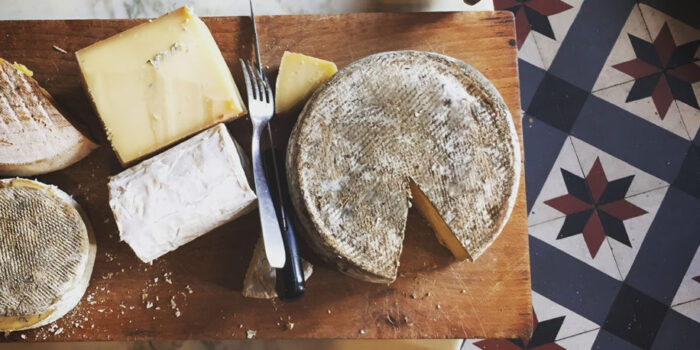
Arguing with the French about food? We wouldn’t dare. So yes: cheese is a wonderful way to finish a dinner. But these cheese boards are so heavenly that you can even devour them without a meal beforehand. How do you put one together? Simple: less is more! We created six as examples, with three types of cheese and one perfectly matching wine.

Blue Stilton
‘We pass’d Stilton, a town famous for cheese which is call’d our English Parmesan’, wrote Daniel Defoe, author of Robinson Crusoe, in 1724. And that is more or less how ‘the king of cheese’, as it is affectionately known in its homeland of England, slowly but surely began its triumphant march. Annual production is approximately eight million kilos, and it is legally protected by the Stilton makers’ association.
Flavor: spicy, nutty.
Wine: Full-bodied port. Blue Stilton is the perfect match for ruby port. The salty, creamy intensity is tamed by the firm sweetness and high alcohol content. An addictive combination!
Board: Blue Stilton + Emmental + aged farmhouse cheese.
Reblochon de Savoie
The name of this semi-hard French cheese, made since the 13th century, is derived from reblocher (‘to milk again’). At the time, Alpine farmers had to pay the landowner tax on their milk production. To reduce the amount, the cows were not milked completely. Once the inspector had left, the animals were milked again. This produced a thick, rich milk with a high fat content. Reblochon was made from this milk. And it turned out to be a brilliant idea, because reblochon is incredibly delicious.
Flavor: mild and nutty to lightly spicy, with hay notes.
Wine: Beaujolais. The fruit-forward classic refreshes your palate for the next bite of indulgent cheese.
Board: Reblochon de Savoie + raw-milk brie + Pont-l’Évêque.
Langres
The first langres, probably originating in northern France, was likely made as early as the 18th century. But illegally, hidden from the tax inspector. As a result, the cheese could not be turned during aging, creating the ‘fontaine’, the indentation on top of the cheese. A century later, langres, with its sticky, wet and glossy rind, appeared in official documents. And now we can’t live without it.
Flavor: aromatic, spicy and creamy.
Wine: The famous dessert wine Sauternes is not cloyingly sweet, but refinedly sweet. And then there’s that aroma of apricots and honey! The ultimate pairing for strongly flavored cheeses.
Board: Langres + Roquefort + aged Remeker.
Munster
Soft French raw-milk washed-rind cheese with a nickname: the stinker from Alsace. Cheese legend has it that an Irish monk left the recipe in the Vosges, after which Benedictine monks who settled in Alsace in the 7th century began making it. Hence the name, which comes from Monasterium, the Latin word for monastery.
Flavor: young Munster cheeses are fairly mild, but when properly aged, the flavor is powerful and (according to connoisseurs) at its best.
Wine: Sweet Oloroso sherry. Munster’s aromatic intensity makes it a no-go with most red wines—they become harsh and bitter. Not so with a fragrant, nutty sherry. A gastronomic highlight!
Board: Munster + Manchego + aged Comté.
Pecorino
Raw-milk sheep’s cheese pecorino is made throughout large parts of Italy, according to local traditions. There are therefore all kinds of varieties, each with its own flavor, aging period and texture. The best-known is Pecorino Romano.
Flavor: spicy, firm and high in salt.
Wine: Valpolicella Amarone. Salt in cheese can make wine difficult to pair. To stand up to it, a wine needs power. And Amarone has plenty of power.
Board: Pecorino + Gorgonzola Piccante + aged Piave
Lagrein wine cheese
Since the 14th century, Lagrein wine has been known as a specialty from the northern Italian city of Bolzano. The cheese also comes from this region (Alto Adige) and is named after the wine in which it ages for five days. The wine is enhanced with garlic, black pepper and other herbs. After the five-day bath, the cheese is aged for at least six weeks.
Flavor: rustic, nutty, full and aromatic
Wine: Vouvray is dry, though usually not completely, and comes into its own with simple, pure food with a little ‘farmhouse flavor’.
Board: Lagrein wine cheese + Sainte-Maure + Doruvael.
And one more thing:
- A good starting point for putting together a varied cheese board is to serve cheeses from different cheese families. There are five: goat cheeses (with sheep’s cheeses sometimes included for convenience), hard and semi-hard cheeses, bloomy-rind cheeses, blue cheeses and washed-rind cheeses.
- Allow for one hundred grams of cheese per person after the meal. A cheese board without a meal? Depending on your appetite and/or love of cheese, you can easily triple the amount.
- Preserve the cheese’s rind, shape and structure when cutting.
- Let the cheese come to room temperature (for one hour) before serving.
- Arrange the cheese on the board in order of flavor intensity: from light to stronger. Start with a bloomy-rind cheese, followed by goat cheese, washed-rind cheese, hard cheese and finally blue cheese.
- Place several cheese knives on the board, especially if soft cheeses are included that stick to the knife.
- Store the cheese in a covered container in the vegetable drawer of your refrigerator.
Also read:


