


A-brand manufacturers hinder cross-border purchasing: consumers pay the price
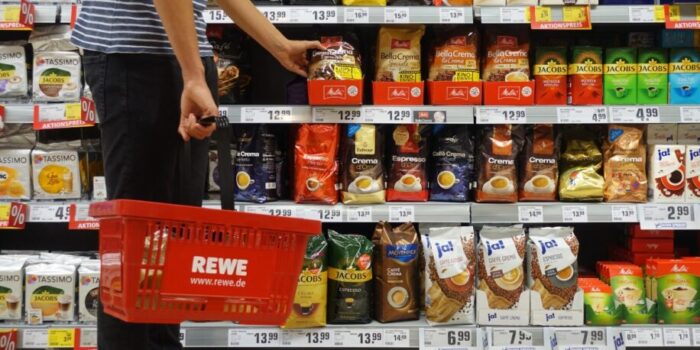
‘I do my shopping in Germany, thank you very much. Much cheaper!’ If you live in the east of the country, you’ve probably heard people say this before. Or perhaps you’re a shopper yourself who benefits from the low prices across the border. Research by the Ministry of Economic Affairs now shows that we do indeed pay more in Dutch supermarkets, especially for A-brands. But what else does it show? That this is mainly because A-brand manufacturers are making things extremely difficult for Dutch retailers.

If products are cheaper abroad than they are here, Dutch stores are allowed to purchase those products. That’s what online supermarket Picnic does, for example: it sources A-brands much more cheaply in Germany. But suppliers turn out to make this incredibly difficult. Stores such as Albert Heijn and Jumbo, for instance, are told that they must purchase from Dutch branches. In addition, some manufacturers simply refuse to supply products from abroad. Why do they do this? Retail companies suspect that manufacturers want to keep prices as high as possible in each national market, NU.nl reports.
Consumers pay the price
The annoying thing is that consumers are the ones who pay the price. A-brand manufacturers benefit enormously from the internal European market, but we don’t notice any of it. In fact, because of this, we pay considerably more for some products here than we do in, say, Germany or France. A bottle of Coca-Cola? You can easily find it 50% cheaper in Germany than in a Dutch supermarket. In total, this concerns around 3 percent of the products on shelves here in the Netherlands, mainly A-brands. Products that we consumers actually want to buy.
Annoying tricks
NU.nl spoke to Michiel Muller, CEO of Picnic. He is extremely frustrated by the purchasing restrictions. He says manufacturers do even more annoying things to make cross-border purchasing as difficult as possible. For example, they supply certain products in different-colored packaging in each country. Muller gives paprika crisps as an example. Here in the Netherlands, they are sold in blue bags, while in another country red is the standard color. That makes buying across the border incredibly difficult.
The question now is whether anything will be done with the findings. Because it obviously shouldn’t be the case that A-brand manufacturers happily cash in while we consumers have to dig even deeper into our pockets.
Also read:
- 14 times supermarket inflation takes painful forms
- Want to do your shopping cheaply? Head to Belgium
- Consumers’ Association isn’t happy: supermarket receipts are full of errors
Sources: NU.nl, EO


