


An ode to the koetjesreep
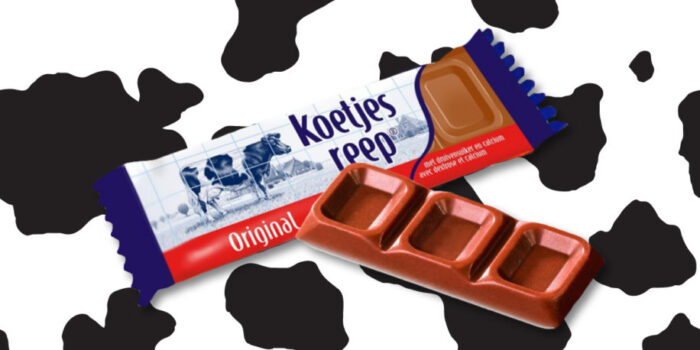
To craft treats for their primary-school child’s birthday, parents nowadays take two days off, but in the past your mother would simply send you into the classroom on your birthday with two koetjesrepen: have fun, sweetheart! And that old, faithful koetjesreep is still just as delicious as it was back then. So what is the story behind the koetjesreep?

To begin with: it isn’t real chocolate . In the Netherlands, you may only put ‘chocolate’ on the packaging if it contains at least 35 percent cocoa, and the koetjesreep is nowhere near that. It didn’t matter for the taste, because we were used to fake chocolate in cocoa-fantasy sprinkles, chocobutter and chocolate cigarettes. Did that make it less tasty? Nah. That delicious, melting feeling in your mouth comes from all the fat in the bar, and the ingredients list on the back of the packaging says it is also packed with sugar. No surprise there: that’s why you finish such a little bar in no time. And shortly after eating, children bounce around the room full of energy.
Old bar
The koetjesreep has existed for more than a hundred years. The first bars rolled off the production line at the Koninklijke Boon Chocoladefabriek in Wormerveer. A useless detail: Dick Laan also worked there; he later went on to write the Pinkeltje books. In the 1970s, the factory was taken over by Klene, whom we also know for their liquorice sweets. And Klene preferred making peppermints and liquorice , so in 1999 they sold the brand on to the Belgian Food Company.
Save the koetjesreep!
No one knows how it happened, but after the takeover, a rumour arose that the Belgians wanted to discontinue the koetjesreep. Panic! Koetjesreep fans created the website Save the koetjesreep and before long, five hundred people were going completely wild there. ‘You should be ashamed that you are letting a piece of Dutch history disappear,’ wrote an angry chocolate lover on the site. But there was really nothing to it. The Belgians couldn’t dispel the rumour, so they decided to collect all the nostalgic stories from those crazy ‘Ollanders about the little koetjesreep and put them on their website. All that grumbling and panic did, incidentally, lead to an increase in sales figures…
Healthy koetjesreep? Oh, give me a break
The Belgians did secretly change the composition of the bar: they added grape sugar and extra calcium. They also made a special bar with dietary fibre, which was put on the shelves at C1000 as the Biba-koetjesreep. That didn’t last long, because it was covert advertising for a children’s programme and besides: a healthy koetjesreep? That’s taking things too far, surely. Now the manufacturer is considering plans to add a little more milk powder to the bar again, to return to the nostalgic flavour. And to build a Koetjesreep museum. Or something like that. Well, if De Jeugd van Tegenwoordig raps about your bar, you’ve pretty much reached the top as a chocolate factory, haven’t you?


