



Back: whole artichoke
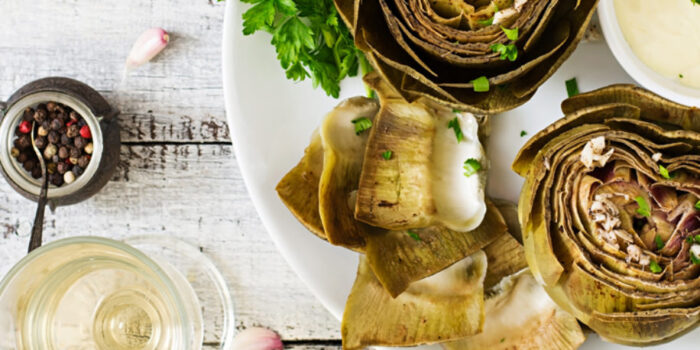
The artichoke, with its pointed skirts and indistinct greyish (or purple-green) colour, was long a no-go in quality restaurants. At most, it ended up disguised in dishes: as an emulsion, mousse, powder or oil. But today’s basic quality restaurants (‘bistronomy’) proudly place the whole cooked or steamed vegetable on the table, skirts and all. And a vinaigrette on the side.

The somewhat rustic artichoke is a difficult thing to fit into the elegant presentation of a restaurant plate as we have known it for years. When it is used, it is usually stripped of its characteristic leaves. In somewhat recognisable pieces, you find its dull base on pizza or in other Italian dishes such as bagna cauda. Otherwise, the thistle-like plant is mainly reduced to its droppable, smearable or sprinkleable essence. Suitable for an elegant plating pattern.
Recognisable
But the new generation of quality restaurants, with chefs who each have a history in the highest echelons of cooking, has largely freed itself from that elegant but often suffocating plating style. They simply place recognisable whole ingredients on the plate. Even if they may not be so beautifully coloured and look a little awkward. Black pudding with pieces of apple. Half or whole roasted onion, peas in the pod, whole boiled or fried potatoes…
Whole or, if necessary, halved: the artichoke is back on the table.
And so we once again see the artichoke with all its skirts, whole or at most cut in half. With a simple (but naturally divine) mustard vinaigrette on the side, as at Rosie’s in Amsterdam.
Mustard mayo
At the Parisian must-eat du moment seafood bar Clamato, it comes with a crab sauce. Jean-Georges Vongerichten’s The Mercer Kitchen in New York City serves it with mustard mayo, chervil and lemon. And at beach bar Hippie Fish in Zandvoort, it is also shining in all its skirts.
How do you eat an artichoke? It requires a little self-reliance: pull off a leaf, dip the soft lower part in the sauce and scrape it off the leaf with your teeth. In the end, the base, which only appears after you have eaten all the leaves and removed all the ‘hairs’, is the icing on the cake.
An added advantage: a whole artichoke does very well on Instagram. Hashtag: #wholeartichoke.
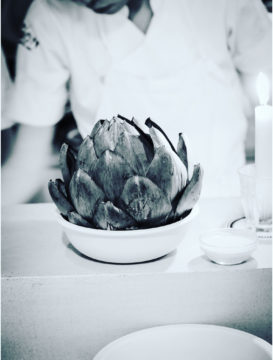
Image: among others, Marjan Ippel


