



Bad news: free compost handed out turns out to be seriously contaminated
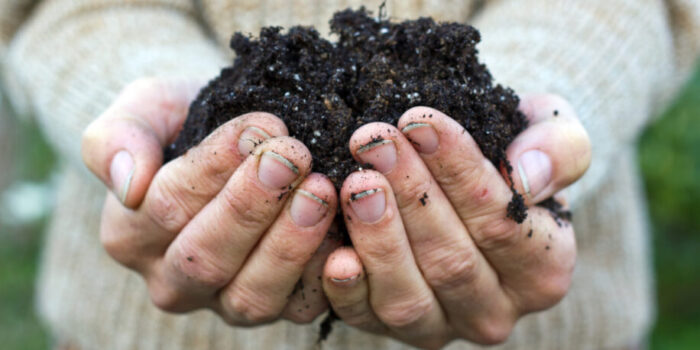
If you collected free compost during National Compost Day last spring, you have reason to be concerned: spot checks and follow-up research have shown that the compost contains as many as 14 pesticides, 16 substances from the PFAS group (which you find in many non-stick pans), and 8 heavy metals. Great for your vegetable garden…

EenVandaag commissioned the research, and various experts responded. Experts are now also calling for the government to tighten the rules on toxic substances in compost.
Compost containing toxic substances
The research into compost distributed to private individuals prompted toxicologists and environmental experts to warn of possible risks to public health and the environment. Toxicologist Paul Scheepers of Radboud UMC says, for example, that users should be better informed about exactly what the compost contains, and advises against using it. “I would not use it and would return it to the waste processor [where it came from, ed.],” says Scheepers. Why would you want to put a product containing toxic substances on soil that may have been completely clean?
Exposure to lead
In one case, lead was even found – although the level was largely within the legal limits, Scheepers says it is unacceptable for children to be exposed to it, for example when playing in the garden.
This needs to improve
The bizarre thing is that no legal limit has been established for the majority of the problematic substances found. That is currently only the case for heavy metals, but if we want to become more circular and use and reuse compost, without strict regulations we risk maintaining a whole lot of waste in our food and environment.
A blanket of poison
Violette Geissen is a professor of soil physics and land management and is affiliated with Wageningen University & Research (WUR). She puts it this way: “We live under a blanket of poison. We are in permanent daily contact with that poison […and this research] gives a picture of what it is like in the environment. You find it in the air, in food and in water. It is actually a reflection of the surroundings, and those surroundings are polluted.”
Producers responsible
The bitter irony is that compost is actually very good for storing CO2 in the soil. As a result, less nitrogen is emitted. So we do want to use more compost, but of course not compost full of toxic substances. Professor Geissen therefore believes that legislators must reduce the sources of these toxic substances. “That is not the responsibility of the consumer who uses the compost.” Emeritus professor of toxicology Jacob de Boer also emphasizes this. These [PFAS] substances can already lead to a weakened immune system at low levels,” he says. “I am absolutely in favor of banning that entire group of substances altogether. That is essential. You cannot expect people [consumers] to assess this. What you offer simply has to be safe.”
The experts are emphatically not trying to cast compost as such in a bad light. Separating organic household waste is much better than burning it with the rest of the rubbish, but ultimately we should not become less healthy as a result, nor pollute the environment even further. That is why (stricter) standards are needed.
Source: EenVandaag, read their articles here about it
Read also:
- Fast-food packaging contains life-threatening PFAS
- Toxic substance in Skittles, Mars in court
- RIVM warns: do not eat fish from the Western Scheldt


