



Batch brew coffee: quality comfort from the machine
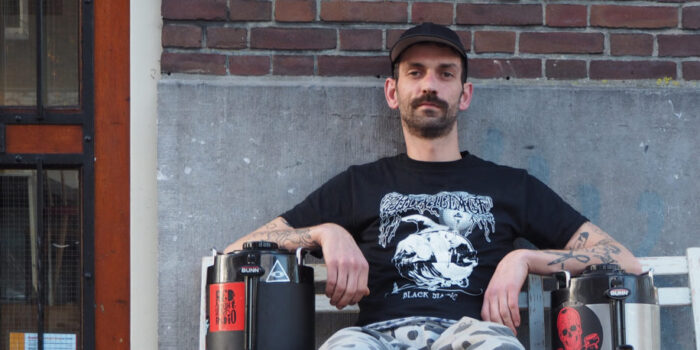
Anyone who watches a barista at work in their natural habitat is more likely to think they’ve entered a sacred temple than a coffee bar. With plenty of showmanship and rituals, they prepare freshly ground coffee completely custom-made, à la minute. That’s how it’s done now, and no other way. But increasingly, we’re spotting a large filter machine on the bar counter. Brewed two litres at a time, so-called batch brew coffee puts all our coffee certainties to the test.

It’s the coffee ritual of recent years: the barista who, à la minute, grinds single-estate coffee beans bought directly from Colombia, Costa Rica, Ethiopia or Kenya and roasted in-house. Then, with great precision and theatre, they use them to make a single thimbleful of espresso. Or alternatively, a mug of filter coffee. Slow but steady.
But while espresso machines are entering their umpteenth new wave and improvements to coffee filters and pots are still appearing on the market almost daily, filter-machine development is also continuing.
Not sexy
Unlike espresso machines, glass filter pots with wooden collars and baristas, the coffee makers à la Fetco and Bunn that professionally drip litres of coffee into an insulated pot are (as yet) not very sexy. Especially that pot sounds decidedly sexless. Like mass production. Like industrial coffee at a roadside restaurant where the second cup is free.
But these machines are so advanced and precise that, when used with house-roasted quality beans, they can effortlessly brew top-quality coffee two litres at a time. Hence: batch brew. It contains all the fruity, floral, earthy and acidic flavours we have by now grown so familiar with. And thanks to the state-of-the-art equipment, it can certainly stand for an hour – and actually two – without losing flavour.
Bert van Wassenhove of the Amsterdam branch of the award-winning Antwerp coffee roaster Caffènation explains: “I don’t know who started it. We’ve been doing it ourselves for about five years. But customers are often still wary. Anyone who insists that artisanal filter methods such as the Aeropress or V-60 taste better gets a blind tasting from me: guess which filter coffee was made with the machine, and you don’t pay a thing. No one has managed it yet.”
Are these machines new?
‘Not at all. Bunn may have been around for twenty years. But you do need to know how to set up a machine like that. And that’s usually where things go wrong. You can adjust all the parameters for each type of coffee. After that, everything happens automatically. Handy in a busy establishment.’
Which beans?
‘It can be anything. But it must be a filter roast. So fairly light in flavour, but full-bodied.’
Your favourite?
‘Yirgacheffe, Ethiopia. With floral notes and even hints of bergamot. It really starts to resemble tea. That’s why I also serve batch brews in a thin-walled cup, as you would tea.’
Man versus machine, and the machine wins?
‘It’s exactly the same quality, in larger quantities. I never brew more than two litres at a time, and sometimes that’s gone within fifteen minutes. But if there’s still some left in the pot after two hours, I bring a cup to the florist.’
So every canteen and truck stop can effortlessly serve perfect filter coffee?
‘As long as there’s little time between grinding and brewing. You can do it too. The Dutch company Technivorm makes fantastic machines for home use.’
Caffènation
Theophile De Bockstraat 371
Amsterdam
Text: Marjan Ippel
Image: Marjan Ippel


