


Bizarre news: meat from discarded racehorses is ending up illegally in Dutch snacks
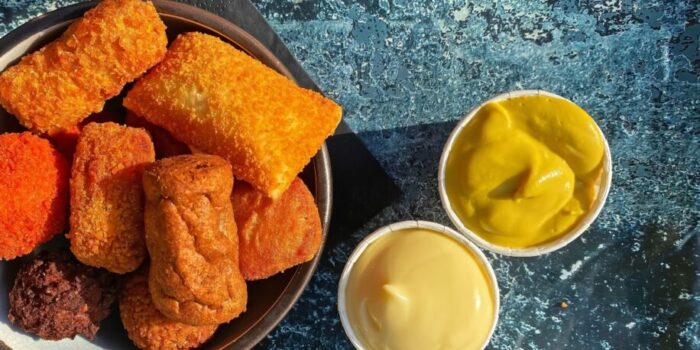
Bad news about the bittergarnituur in your freezer or the one you ate on the terrace this weekend. There’s a chance it contains meat from discarded racehorses.

I don’t know about you, but this news gives me a few mixed feelings. That bittergarnituur mix in my freezer just isn’t the same anymore.
New identity
What’s going on? House of Animals, a Dutch animal protection organisation, and the Irish TV programme RTÉ Investigates conducted a joint investigation. The horses in question are racehorses (mainly from Ireland and the United Kingdom) that don’t win enough races or are too expensive to care for. Via horse traders, these animals are transported to (among other places) our country ‘under appalling conditions’.
From that point on, quite a few shady practices take place. The horses are given a new identity here. They receive a new microchip and a fake passport, making it virtually impossible to find out where the horses really came from. Also because the chip comes from Germany, which has a closed database. Horse traders then take them to various slaughterhouses across Europe. Including the slaughterhouse in Kerkdriel, from where the meat may therefore end up in your bitterbal or croquette. Probably not in your frikandel, incidentally, because not all frikandellen contain horse meat (did you know that?!).
Medication
The way these horses are treated is, of course, the first thing that makes your hair stand on end. But that’s not all. The fact that we may be consuming this meat through snacks isn’t exactly good news either. There’s a strong chance that the horses received medication during their racing careers. Medication to help them recover from injuries. And you guessed it… That stuff isn’t suitable for humans.
Just like a Netflix series
The story could easily be turned into a Netflix series, don’t you think? What immediately stands out is the role the Netherlands appears to play in all this. The racehorses first come to the Netherlands, where they are given their ‘new identity’. Why does this have to happen here specifically? Because a vet isn’t needed here to arrange that new identity. In quite a few other countries, a vet’s involvement in this process is mandatory.
In any case, it raises a lot of questions for Karen Soeters, founder of House of Animals. She finds it downright bizarre that our country is once again ‘a hub in the network of animal suffering’, as reported by NU.nl. The foundation wants the Netherlands Food and Consumer Product Safety Authority to introduce at least additional monitoring of animal transport from the United Kingdom and Ireland. They also want an investigation into fraudulent practices involving passports and microchips, and for the slaughterhouse in Kerkdriel to be closed. To be continued, then.
Divided camps
The internet is going wild too. Just not necessarily all in the same way as Karen. Yes, there are people who see this story as the ultimate push to go fully vegetarian: ‘People, just choose a veggie bitterbal’ and ‘Once again, I’m glad I haven’t eaten animals for years… it’s all so awful…’
But then there are also the people who really couldn’t give a (bitter)ball. ‘Now I know why I’ve been neighing so much lately’ and ‘Who cares!! It’s just tasty’, we read, for example. And words to live by (for some, at least): ‘No matter how fast he is… he’ll still become a frikandel’.
Also read:
- 10 frikandel dishes for people who only want to eat frikandellen
- Frikandel lovers, take note: with these spices, everything tastes like your favourite snack
- 14 pets with incredibly bad luck (when they tried to steal food)
Sources: NU.nl, Het Parool


