



Brining chicken: why and how?
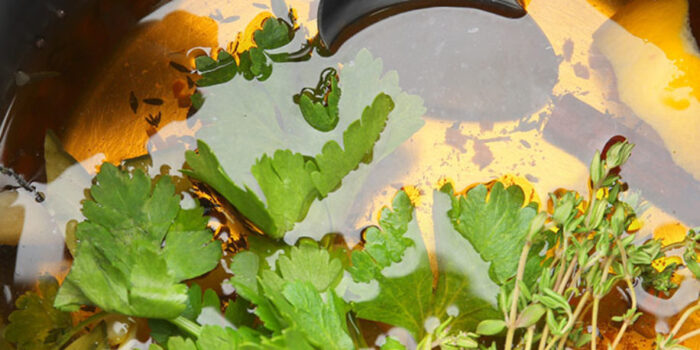
Want to transform an ordinary chicken into one of the juiciest, most flavorful meals you’ve ever had? Read this.

Brining a chicken sounds like a highly complicated cooking technique that only chefs dare to attempt. But if you really want to prepare a juicy chicken, it’s definitely worth considering. It’s absolutely not difficult, so just give it a try.
What is brining?
A brine is nothing more than water with a lot of salt. If you put chicken — or anything else — in it, you’re brining. This preserves the meat, but because salt breaks down the proteins, the meat also stays extra juicy when you heat it later. You can also make a dry brine, in which you rub a salt mixture directly onto the chicken.
Double bonus in both cases: the salt seasons the chicken. You can also add flavor in the form of herbs, spices, garlic or citrus zest. That way, your chicken is already mega delicious before it even goes into the oven or pan.
Why?
So brining the meat gives it extra flavor and prevents it from drying out. Perfect, because tender and juicy meat is what we’re all after, right? To prevent drying out, you can also put butter under the skin or butterfly your chicken. But do you really want to reduce the chance of overcooked meat? Then brining is your best option.
One of humanity’s greatest frustrations is that when you prepare a whole chicken, the breast is already dry before the legs are cooked. That’s why brining is often used for whole chickens, but individual chicken breasts, or even a pork chop, also benefit from a dip in the brine.
Wet or dry?
A wet brine adds moisture, resulting in extra juiciness. A dry brine, on the other hand, draws out moisture. This makes the flavor more intense and keeps the skin crispier. Both methods are wonderfully delicious; it depends on what you prefer and what you’re in the mood for. We usually go for the wet version because we simply find it very easy to throw everything together in a large pan.
How?
Good news: you most likely already have everything at home for your first brine. In principle, all you need to do is dissolve salt in water. But if you really want to do it properly, add sugar, herbs and spices too. The standard ratio is 70 grams of salt per liter of water. If you stick to that, you can take it in any direction.
It’s important to heat the water with the salt first so that it dissolves, but make sure to let it cool completely again before the chicken goes in. The video below explains very clearly how to brine a turkey, which is essentially the same technique, just in a larger pan. Let the chicken soak for 12 to 48 hours for optimal results.
Dry
Prefer a dry brine? Mix 150 grams of salt with two tablespoons of baking powder and herbs, spices or other flavorings. Rub this mixture all over the chicken so that it is completely covered with a thin layer of salt. Have some left over? Save it for another time; if you apply the salt too thickly, the end result will be an extremely salty chicken. Cover the chicken with plastic wrap and refrigerate for 12 hours to three days. Rinse the salt off the chicken before preparing it, and pat the skin dry for extra crispness.
Read also:


