


Can blue cheese go bad or not?
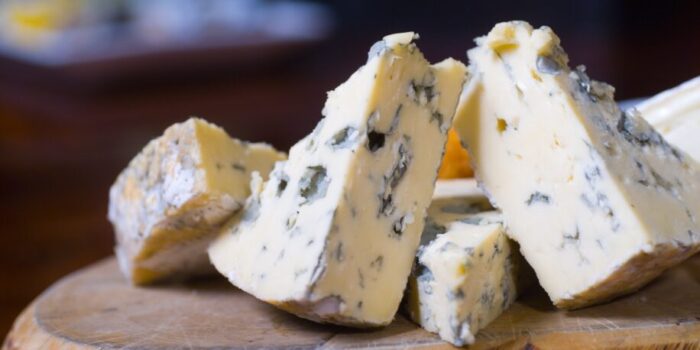
A mouldy blue cheese such as Roquefort or Blue Stilton is absolutely delicious. At least, if it looks and smells the way you’re used to. Because the last time I brought home a piece of blue cheese, the smell that greeted me was pretty intense. So intense that I started wondering whether blue cheese can actually go bad. I got the answer from master cheesemonger René Koelman of Bourgondisch Lifestyle.

Blue cheese is cheese with blue mould veins running through it. Each type of blue cheese is made with a unique cheese culture (bacteria), which is added to the curd. Holes are then pierced into it to allow oxygen in, and the cheese needs at least 3 months to turn blue as the mould culture grows.
Growing flavour
But what if the moulds in the cheese are no longer blue but brownish, and the smell is even more intense? Does that mean the cheese hasn’t gone bad? The answer is no. “A blue cheese can actually never really spoil in the way a fresh cheese such as mozzarella does. The bacteria and enzymes in blue cheeses are constantly active and growing. So if the cheese sits for longer, the concentration of bacteria increases, and the flavour of the cheese will develop along with it,” René explains.
Delicious?
René: “That means that if you keep a blue cheese for a long time, it will actually start to ferment. This process causes the colour, smell and flavour to change and become increasingly intense. At some point, the cheese will go past its peak and become so intense in flavour that most people will no longer enjoy eating it.”
So the question isn’t when the cheese has gone bad, but when you no longer enjoy the flavour. One person can handle more than another. So always taste and smell it first before you’re tempted to throw that delicious cheese in the bin. Incidentally, I finished the entire piece.
Read also:
- Blue cheese with Nutella: disgusting or golden?
- 5 surprising facts about blue cheese
- Leftovers from the cheeseboard: which rinds can and can’t you eat?


