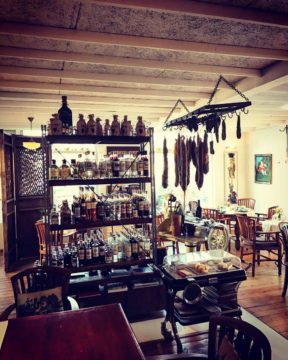
De Pronckheer in Cothen
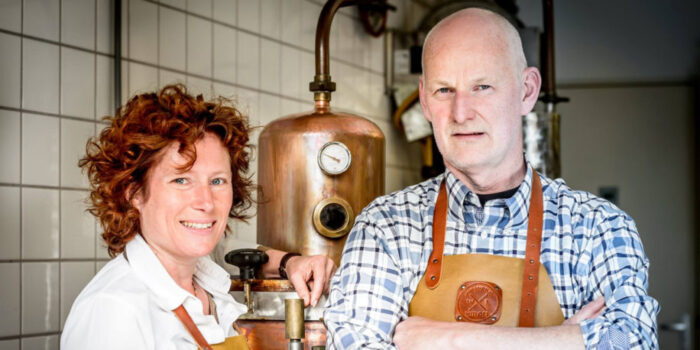
Inge and Arjan have been running De Pronckheer in Cothen since early 1995. We spoke to them about the controversy surrounding no-waste meat, spirits made from surplus fruit and their new direction.

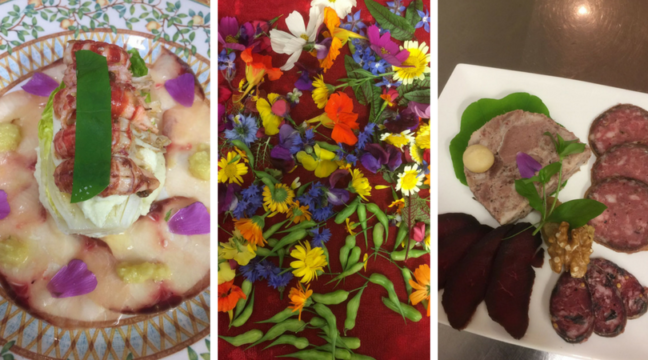
De Pronckheer is a special place among the orchards, in an old hunting area in the province of Utrecht. Every day, Inge and Arjan dedicate themselves with great love and commitment to ‘saving’ grade-B fruit and game. Here, for example, you can eat 13-year-old wild polder eel that became stranded at the locks, ceviche of bleak with marigolds and carpaccio of surplus geese and swans. At the distillery, rejected fruit is processed into eau de vie.
Like every good story, this one begins with love. Inge: ‘I worked at Stadskasteel Oudaen in Utrecht and Arjan was the owner and chef at Restaurant le Piano, diagonally across the street, also on the Oudegracht. We fell in love and left Utrecht. We found the city too hectic and wanted to experience each other and life more intensely. That is how we ended up here in Cothen, in what was then still an old drivers’ café. It was old-fashioned, with Persian rugs on the tables, but we immediately saw the charm of the building, with its cosy open fireplace and terrace on the Kromme Rijn. We moved in on Boxing Day, 26 December 1994.’
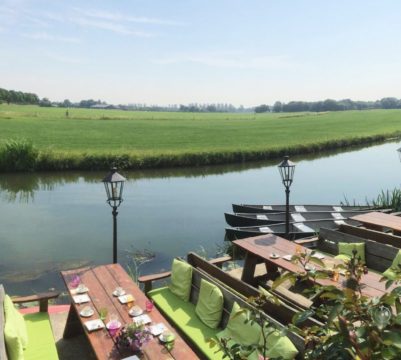
Getting to know the farmer
‘Arjan’s brother-in-law and sister had a Bartimeus farm, where people with disabilities work. They supplied us with their vegetables and eggs, and sometimes a lamb. I started wondering what else was being farmed in the area. When things were quiet, I would drive around to get to know the region. Whenever I saw a sign saying “fruit for sale”, I would get out, introduce myself to the farmer and buy his fruit. Within six months, we removed orange juice from our range. Oranges don’t come from the local area. We look out over apple and pear trees, so the choice of local juice was quickly made. It became a hit, and that is how we began working more and more with farmers and the land.’
Chef Arjan: ‘This was exactly why we wanted to trade the city for the countryside, and it felt very good. Skinning a hunted roe deer, plucking nuisance pigeons and working with the vegetable garden around the corner; that is why I wanted to be an artisanal chef: experiencing nature and working with local producers.
De Pronckheer has never had to change its vision. What is now seen as a concept has been a way of life for Inge and Arjan for years.
And it went further. Inge explains: ‘Across the road, I got cherries that Arjan then worked with. At the table, I told the story of the cherry grower, but I actually thought it made more sense for the farmer to tell it himself. That is how the idea of the communal tables in the orchard came about. Every season, I organised a lunch or dinner with a different farmer.’
Controversy
Besides vegetables and fruit, De Pronckheer now also works with Dutch freshwater fish and local game. The area turns out to be an old hunting ground with many roe deer, ducks and pigeons. The hunted game therefore ends up on your plate at De Pronckheer. ‘The large numbers of geese from the surrounding farmland are a good example. These animals are hunted because they damage the farmers’ land; we think it is a waste and, moreover, disrespectful to the animal if it ends up in the bin.’
But not everyone understands this. Some people find it offensive. Things escalated at the time. ‘They stood at the door, we received abuse over the phone and on social media, and it even went as far as parliamentary questions. But it is about sustainability, and we choose that over a piece of farmed meat or farmed fish.’
Copstootje 2.0
‘The farmers brought us more and more surplus fruit. At one point, we had hundreds of kilos. You can’t make desserts from all that, so we decided to start distilling. This extends our no-waste philosophy from the plate to the drinks! For example, we make eau de vie from apples, pears, plums and cherries. In an aged style like Calvados, but also genevers. A new creation is our ‘kopstootje nieuwe stijl’. We distil beer into, for example, a genever. You can taste the flavours of the beer in the spirit. This creates a seamless connection, and we preserve our Dutch heritage in a modern form.’
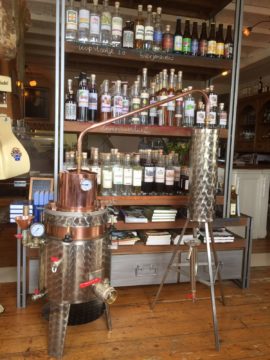
Tasting room
After more than 25 years in hospitality, we are starting to struggle with the long working days. During the day, we prepare, and in the evening we work until late at night. The passion and emotion are still there mentally, but the body is protesting. With the growing appreciation for cocktails, spirits and breweries, we see potential in what we were already doing: distilling. We now supply restaurants, liquor stores and wholesalers, but people can also have a genever, gin or vodka made under their own label, or have their own fruit turned into Eau de Vie. Everything is tailor-made, and we are happy to think along.’
‘We are going to finish our à la carte restaurant and continue in a convivial atmosphere. We will keep organising themed evenings, communal tables and craft days, because there is so much to tell. You can book with your own group, whether for business or privately. For example, start in the distillery, take part in a workshop and continue with a tasting among the stills. Then you will receive a richly filled local platter, complemented by lunch or dinner. It has become an enrichment: food and drink with a story. We create an original tailor-made plan and, if necessary, will come to you with our 30-litre still. Via our Facebook page, you can keep up to date with our regional packages and all our activities. More information and options can be found on our website.
De Pronckheer
Graaf van Lynden van Sandenburgweg 2
Cothen Open: by request, 7 days a week www.pronckheer.nl