


Do: flavour your oil
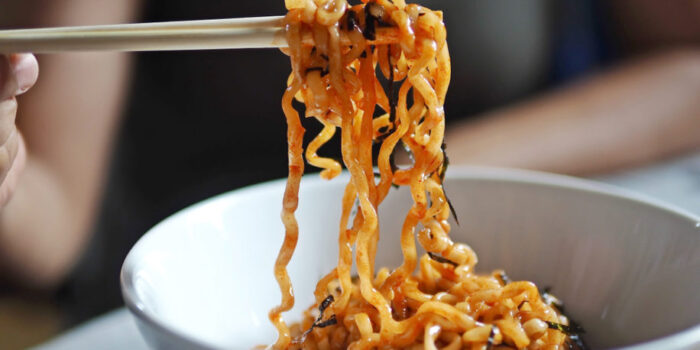
My fridge is full of plastic squeeze bottles filled with homemade oil. Shallot oil, spring onion oil, chilli oil and so on. Flavoured oil always comes in handy when you want to give a dish that little extra burst of flavour.

How to make it
Different types of oil can completely change your cooking game. A drizzle over your rice, egg, fish or vegetables, or stirred through your dressing, and your dish is instantly next level. That’s exactly what you want, right? There are several ways to flavour oil. One ingredient is better suited to infusing in the oil, while another is best puréed into it. Paying attention?
What kind of oil?
What’s the best type of oil to flavour? It depends entirely on what you’re flavouring it with and what you’re using it for. For Italian or Mediterranean flavours, olive oil is best. Because the flavour of the flavouring ingredients infuses into the oil, there’s no need to use the very best quality. Going for an Asian twist? Then it’s best to use a neutral oil such as sunflower, peanut or rice oil.
How do you make it?
That all depends on what you’re making your oil with. You have three options: cold infusion, warm infusion, and puréeing and straining. The first option is the easiest, but it does take agonisingly long. Put your ingredients in the oil and wait 2–3 weeks. Do you have the patience for that? Great. I don’t, so I always heat the oil.
Heating
There are two techniques for working with hot oil. The first is to heat the oil with all the ingredients in a saucepan and let everything infuse at a low temperature for about fifteen minutes. Stir well and make sure the ingredients don’t burn. Another way is to put all the ingredients in a heatproof bowl, heat the oil to 180 °C and pour it over the ingredients.
Make sure the bowl is large enough, because the oil will fizz. Let the ingredients cool to room temperature and strain the oil. Easy as that! Looking for a specific oil? Here are a few of our favourites.
Chilli oil
My favourite way to make chilli oil is to put all the ingredients (including dried chilli flakes, star anise and ginger) in a heatproof bowl and pour all the oil over them. You can find the exact recipe here.
Spring onion oil
This is also a standard feature in my fridge. Cut 12 spring onions into very thin rings and pat them slightly dry, otherwise they’ll splatter enormously in the hot oil. Heat around 300 ml neutral oil in a small saucepan, and test whether the oil is hot enough by dropping in one spring onion ring. The oil should start to bubble gently. Add all the spring onions and keep stirring until everything is beautifully golden brown and crispy; this can take a few minutes.
Strain the oil and leave it to drain thoroughly. Drain the crispy spring onions on kitchen paper and season with salt. Congratulations: alongside delicious oil, you’ve also made fried onions 2.0.
Lemon or lime oil
Put the zest of 1 lemon, 250 ml olive oil and 1 tsp salt in a small saucepan. Optionally add 2 crushed garlic cloves and/or 1 tsp dried chilli flakes. Heat slowly until it just begins to bubble, then let it infuse over low heat for 20–30 minutes, until the lemon zest is soft. Leave to cool and remove the ingredients from the oil.
Basil oil
Blanch the 30–40 g basil leaves in water for 10 seconds (just below boiling point). Drain and cool in iced water, so they don’t continue cooking and retain their beautiful green colour. Put the basil and 500 ml olive oil in a blender with a pinch of salt. Blend until the basil is completely puréed and leave to stand for about 30 minutes. Strain the oil through cheesecloth; if all goes well, you’ll be left with a beautiful green oil without any pieces.
Also read:


