



Doctor says: ‘Eating less salt is unnecessary’
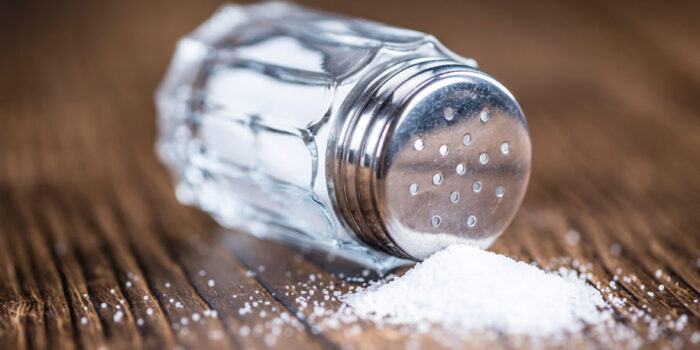
The Nutrition Centre recommends a maximum of 6 grams of salt per day. But British professor Tim Spector thinks that’s complete nonsense. He places all kinds of research on the health risks and benefits of salt side by side and concludes: take that advice with a very large grain of salt.

Eating less salt is thought to lead to lower blood pressure and a reduced risk of a heart attack or stroke. Tim Spector takes this idea as the starting point for a chapter in his new book Opgelepeld, in which he examines health myths. He works his way through piles of scientific articles and lists the most important conclusions.
And what does he find? People with high blood pressure can indeed lower it slightly by eating less salt, but that effect is tiny compared with blood-pressure-lowering medication. Moreover, in studies of healthy people on reducing salt in their diet, he finds no reduced risk of heart attacks, strokes or death.
Salt sensitivity
You read that correctly: all the government campaigns about eating less salt, the advice from dietitians and doctors’ warnings do lead to people eating less salt, but eating less salt does not lead to fewer heart problems. And people who have blood-pressure problems benefit more from medication than from a salt-free diet.
Another interesting discovery: some people react very strongly to salt, while others do not. In some people, blood pressure rises when they eat a lot of salt; other people notice nothing. So there is such a thing as ‘salt sensitivity’, and that sensitivity is genetically determined. You can eat salt-free food all you like, but if you are not the salt-sensitive type, it makes no difference at all.
Low-salt isn’t always good
In his book, Spector takes it even further: studies involving people with diabetes showed that their health actually deteriorated when they started eating less salt. A low-salt diet could lead to a poorer insulin response—but more research is needed in this area, says Doctor Spector.
Most of the salt is in our food, says Spector. And under pressure from the low-salt lobby, the food industry began looking for substitutes for salt, so that products could proudly be labelled ‘low-salt’. But what is put in food to make it taste good when salt has been removed from the recipe? Potassium chloride, for example, but too much potassium is harmful to people with heart and vascular disease, liver conditions and diabetes.
MSG is also added to give food flavour, as is lysine. And is that really what you want? ‘The examples at least show the potential health risks of tinkering with something as simple as salt by adding chemical substances and mixtures that we know practically nothing about,’ says Doctor Spector.
Stop snacking and don’t worry
The conclusion: those salt guidelines are no good. For most people, their current salt consumption is not a problem. Too little salt could actually be harmful. And if you consume a lot of salt because you eat a lot of ready-made meals, fast food, snacks and crisps, then your snacking is the problem—not the salt.
Also read:
- Browning minced meat: this trick makes it perfect
- Here’s how to send food back
- This doctor is outraged: hospital food is so unhealthy, even though it should help people get better


