



Dreaming of a life as a winemaker? This is the first step towards your own house wine
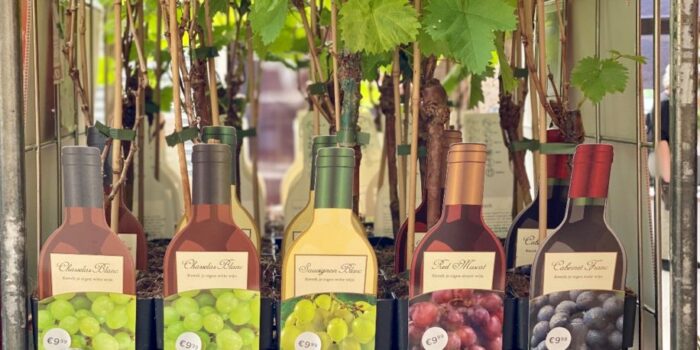
How fun! You can now buy a grapevine at Jumbo (€9.99) ‘to grow your own wine’. Wine from your own chateau (studio, apartment, family home): how fun is that? Wonderful, of course! Because who wouldn’t want to drink their own house wine every day? How great would it be if, in quarantine, you always had wine in stock? But before you start cheering too loudly, quite a lot is involved in playing winemaker. The next 12 months will look roughly like this:

January
It’s the middle of winter, but the vines need to be pruned and the old branches removed so that as many grapes as possible can grow. And a proper winemaker naturally has a cellar full of wooden barrels – they need to be filled with the ‘new wine’ from last autumn.
February
While the vines slowly awaken, pruning continues and you need to carry out maintenance in the cellar. For example, transferring the wine from one barrel to another; this leaves the sediment behind in the barrel and ‘clarifies’ the wine.
March
The first buds appear and you have to plough vigorously to keep the weeds under control. Then: into the cellar you go: over time, a small portion of the wine evaporates (the ‘angel’s share’), so you need to top up the barrels. The wines from last year that are meant to be drunk young, such as rosé, need to be bottled now.
April
Ah, this is exciting: the first bunches appear on the vines. You need to prune away the excess leaves and branches so that the grapes get plenty of moisture and sunlight.
May
All unwanted buds or shoots that threaten to overburden the vine (which is harmful to the quality of the harvest) need to be removed. And although it’s spring, it can still freeze at night. Fatal for the young bunches. To protect them, you place heaters or wind machines in the vineyard.
June
Let the sun shine! You hope for good weather so that the grapes can grow abundantly. By tying up the vines and pruning away the shoots, the sunlight can reach them properly. In the cellar, the barrels of wine need to be topped up once again.
July
The fungal diseases that plague grapevines thrive in hot, humid weather. So in July, weeds need to be removed, and sometimes the vines need to be sprayed as well. Hopefully, by now you’ve looked into all the pesticides and alternatives to them?
August
The blue grapes turn red-blue. You need to remove the leaves around bunches that have not yet ripened evenly. The vine has stopped growing, and now everything must be prepared for the harvest. Ordering barrels, rounding up pickers…
September
This is what you’ve worked towards all year: harvest time! Every day, you walk through the vineyard to check whether the grapes are ripe enough and picking can begin. The harvest takes 1 to 3 weeks, depending on the size of your winery and the weather conditions.
October
After the harvest, you provide the vineyard with organic and mineral fertilisers so that the vines have enough ‘provisions’ for the winter. The harvested grapes need to be placed in large vats, where they slowly ferment into alcoholic grape juice.
November
As soon as the leaves have fallen, you can start pruning. A time-consuming job that lasts until mid-March. In the cellar, the second round of fermentation has begun and the grape juice is really starting to look like wine. Exciting!
December
You nervously bite your nails, because the very young wines are being tasted for the first time. In the vineyard, there is a brief pause. The wines from last year’s harvest can be bottled – and proudly served during Christmas dinner. Finally, a moment of relaxation!
Have we cured you of your dream? Fortunately, for €9.99 you can also pick two delicious bottles off the shelf at Jumbo. Cheers!
Read also:


