Eating Mold
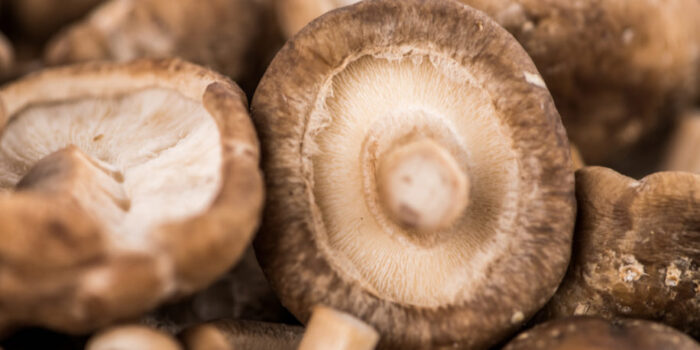
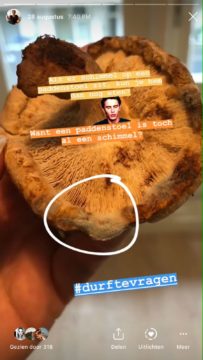
Sometimes you suddenly find yourself faced with a pressing question in the kitchen, like my lovely colleague Emma did recently. There was mold on her shiitake mushrooms, so she wondered: can you still eat them? After all, a mushroom is a fungus too, right? I looked into it for her.

“There are many different types of fungi. Fungi that are not harmful include, indeed, mushrooms or the blue mold in blue cheese. Those are desirable fungi,” explains Wieke van der Vossen, a food safety expert at the Netherlands Nutrition Centre.
Toxins
“But,” she continues, “there are also types that are undesirable. Take mold on jam or mold on cheese, for example. In addition, the mold itself may sometimes not be harmful, but toxins that are harmful can still be produced. These are known as mycotoxins. You often cannot tell from the outside whether mold is harmful or not.”
Cutting it off
Her advice, therefore, is to throw away products with (undesirable) mold growth. “An exception to this is hard cheese. We know that in this case the mold does not really penetrate further into the cheese, and if you cut away the mold generously (1 cm), that is sufficient.”