



Fatty and juicy suckling pig
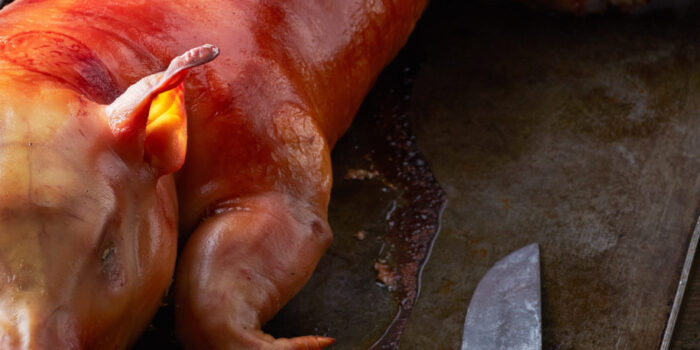
A suckling pig is deliciously fatty and tender. It is only a few weeks old and has been fed nothing but its mother’s milk, yet the meat is full of flavor. This is how chef Wil Demandt (Bordewijk) prepares the ultimate suckling pig.

preparation: 1.5 hours
cooking: 3 hours
marinating: 12 hours
Choose your meat
Ask the butcher for a suckling pig (including liver and kidneys). Depending on its age (maximum 6 weeks), its weight can vary from roughly 4 kilos to 20 kilos. The younger it is, the lighter it will be. It is best to choose a smaller one (due to the size of the oven). Ask your butcher or supplier to debone the suckling pig.
When deboning, it is important to remove the rib cage and other bones, as well as the organs, including the bone in the upper leg (the trickiest part; leave the lower-leg bone in). Leave the head and (partly deboned) legs attached. Trim away ragged meat and set it aside for the filling.
Marinating
Mix the olive oil, garlic, rosemary, pepper and curing salt together. Rub the inside of the deboned pig with the oil mixture. Rub the skin with curing salt (this gives it a beautiful pink color). Leave it overnight in a sealed container in the refrigerator. Keep all the trimmings, the liver and the kidneys in the refrigerator. Roast the carcass in the oven for the stock (1 hour, 180 °C).
Filling
Pass the liver, kidneys and all the meat trimmings through the meat grinder (coarse 8 mm plate). Mix with breadcrumbs, salt, pepper, fennel seeds, shallot, garlic, parsley and sage, and 1 dl cognac. Fill the pig with this meat mixture (‘farce’). Sew the pig closed with wide stitches (approximately 2 centimeters apart) using butcher’s twine and a sturdy needle. Remember to sew the tail opening shut properly (to prevent the filling and juices from escaping).
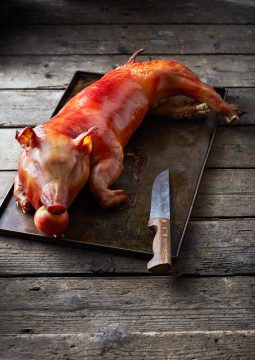
Arrange the pig on the baking sheet. Fix the mouth open with, for example, an espresso cup if you want to put an apple in it later (the mouth will become stiff after roasting). Wrap the ears and tail in aluminum foil to prevent them from browning too quickly during roasting. Place the baking sheet (with a drip tray underneath) in the oven at 130 °C for approximately 2–2.5 hours (or until the internal temperature reaches 65 to 70 °C). Brush regularly with olive oil for crispness and color. Allow it to cool thoroughly before removing it from the oven. The skin is under tension and may tear. Refrigerate for at least 8 hours (otherwise it may fall apart later). Set the collected roasting juices aside. In the meantime, make a stock from the bones and carcass (simmer the roasted bones for 2 hours in a pan of gently boiling water).
Roasting
Take the pig out of the refrigerator 3 hours before serving so it can come to room temperature. Reduce the stock together with the roasting juices to a flavorful gravy, adding a generous splash of balsamic vinegar and chopped sage. Heat the pig in an oven at 130 °C for 30 minutes, then at 200 °C for 10–15 minutes to crisp the skin.
Resting
Remove the pig from the oven and let it rest for approximately 15 minutes, loosely covered with aluminum foil. Carve the pig with a serrated knife (so the crispy skin remains intact).
Tip
Roasting? In restaurants in Portugal and Spain, suckling pig generally goes in the oven, but in the Spanish city of Segovia, known for its ‘cochinillo’, suckling pig is roasted over an open fire. Note: roasting takes longer.
Read here about the unexpected place where our editor in chief found a suckling pig.
The Perfect Pig – from farm to plate
Marcus Polman
€16.95
Fontaine Uitgevers

Image:


