


FavorFlav guide: Italian charcuterie
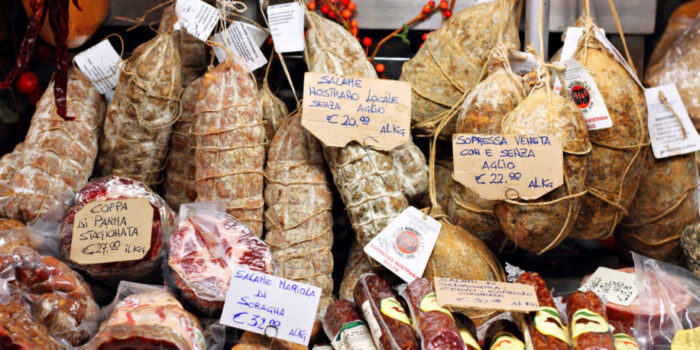
We love Italian snacks, from prosciutto to salami. Perfect on a drinks platter or a generously topped sandwich. But what exactly are the differences between all those Italian charcuterie varieties? Now you know.

First things first: Italian charcuterie is, of course, not made from meat secretly sourced from Dutch pigs or cattle. To make sure you’re getting a sausage or ham from Italy, you should at least check whether it bears the DOP quality mark. Check? Then it’s time for step 2: choosing between all the different varieties.
Salami
The best-known of them all. Salami is made from pork and pork fat and seasoned at the very least with pepper and garlic. The sausage is then smoked, dried or cured. Salami comes in different forms: you have those slices of salami from the supermarket, but also the dry, hard sausage with a white casing, such as salami piccante.
Mortadella
This pale pink pork is made from very finely minced pork, which gives it its smooth texture. Cubes of pork fat, herbs and sometimes pistachios are added. The sausage is creamy and soft, and is best served as thinly sliced as possible.
Prosciutto
There are several different types of prosciutto, the best known being prosciutto di Parma (Parma ham); it is slightly sweet and nutty. Prosciutto di San Daniele is a somewhat sweeter ham, with a slightly darker colour. Prosciutto crudo is dried for a year or longer; the ham is deep red and sweetish, with a rich flavour. Then there’s prosciutto cotto: this is cooked ham, pink in colour and lighter in flavour.
Bresaola
Unlike the rest of the charcuterie mentioned, bresaola, which comes from the Italian Alps, is made from beef. The (lean) meat is salted and dried for around 70 days. The result is a dark red, almost purplish colour and a somewhat tougher, firm texture. Italians serve it with finely chopped raw artichoke as an antipasto, but you can also use it as carpaccio.
Coppa
Coppa is different in every region of Italy. In principle, it is made from pork shoulder or neck, but each region has its own spice blend with which the meat is rubbed. It is then hung and cured. The best-known variety in the Netherlands is surely Coppa di Parma, from the Emilia Romagna region. It has a soft texture and melts in your mouth. Mmm!
Pancetta
Italian bacon: it is made from pork belly and seasoned with salt, pepper and other herbs before smoking. It is then rolled, tied and hung up to dry. It is basically used in the same way as bacon, often mixed into pasta dishes to give them some extra flavour.
Soppressata
This sausage is a type of salami, and in each region it is made from a different part of the pig. The way the salami is seasoned also varies by region, but it is often somewhat spicier than ‘regular’ salami, thanks to the use of red peppers. The meat is also ground more coarsely than salami.
Lardo
Lardo is salted back fat. Very fatty and very mild in flavour. Although it is a type of bacon, you’re not meant to fry it like pancetta; it is best served on something warm, such as a piece of toasted bread. It melts a little and tastes buttery.
Lonza
Lonza is dried pork loin. It is a deeper red and seasoned with pepper and fennel. It is sliced as thinly as possible and served with plenty of olive oil. In Italy, it is eaten in spring with some pecorino and fava beans. Tip: delicious with a full-bodied red wine.
Speck
Speck is somewhat similar to bacon; it is made from pork loin and belly. However, it is then seasoned, smoked and cured, so you no longer need to fry it (as you would bacon). It is seasoned with rosemary, juniper berries and pepper. Ultimately, speck has a smoky flavour with a sweetish, slightly herby taste.


