


Foodlingo: omakase
Food editor at large Marjan Ippel regularly introduces a new or recently re-emerged term from the food scene here, the so-called foodlingo. No foodie can do without it. After all, ‘what (not) to speak’ is at least as important in food as ‘what (not) to eat’.

This time: Omakase
In molecular cuisine, it was perfectly normal to prescribe exactly how the guest should eat the dish for the optimum effect (“First stir twice counterclockwise, then once clockwise, and finally spoon it out from underneath the plate”). And that was something this cuisine had in common with Japanese cuisine. Because a Japanese chef also wants you to attack his food exactly as he intended.
After all, the chef knows best. He spends all day working on his dishes, while you eat no more than a few bites. Omakase is therefore a very common Japanese serving style.
Table d’hôte
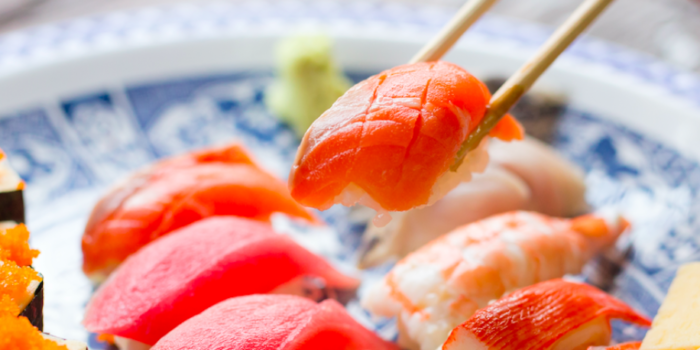
Literally, omakase means: ‘I leave it up to you’. And ‘you’ refers to the Japanese chef. This makes omakase the opposite of à la carte. And it resembles what is called a ‘surprise menu’ or ‘table d’hôte’ here: whatever the chef serves. But with sushi. Although not exclusively. The entire Japanese cold and hot menu can be served omakase-style.
This serving style goes beyond merely choosing the dishes. It is about the chef guiding the guest’s flavors as both an artist and craftsman. To start with the latter: using the techniques he has mastered best, he can create the ultimate eating experience.
Climax
Moreover, the chef simply has the most experience in building the flavors and textures of a meal, allowing him to skillfully work toward the absolute climax for the senses. If he left this careful work to the guest, they might order the dishes in the wrong sequence or use the wrong techniques!
It is precisely the entertainment element that makes omakase so popular in Japan
At the same time, the chef knows what fresh ingredients came in that day and in which dish and with which technique they will come into their own best. In that respect too, he has an advantage over the guest, which ultimately works very much in the latter’s favor.
Theatrical
Finally, the absence of an à la carte menu gives the chef the freedom to be innovative and add elements of surprise, turning his actions—filled with equally theatrical and indispensable cutting, kneading, grilling and other techniques—into something resembling a culinary theater show.
This is further emphasized by the fact that the guest sits at the counter with the chef and can keep an eye on his every move, like a select audience watching a performance on stage. And it is precisely that entertainment element that makes omakase so popular in Japan. And, for the past few years, in entertainment-driven North America as well.
Velvet coup
In our country, Amsterdam establishments such as Yamazato, An, En and Izakaya offer an omakase option. Rotterdam’s Yama even serves exclusively omakase-style. Nevertheless, here it remains the exception rather than the rule.
Could this have something to do with the notorious Dutch stubbornness? After all, even though the term ‘omakase’ suggests that power is voluntarily handed over to the chef, in the end it is still a coup. Even if it is a velvet one. And a guaranteed win-win coup.
But try explaining that to those stubborn Dutch people.


