



From Coffee Cherry to Caffeine Boost
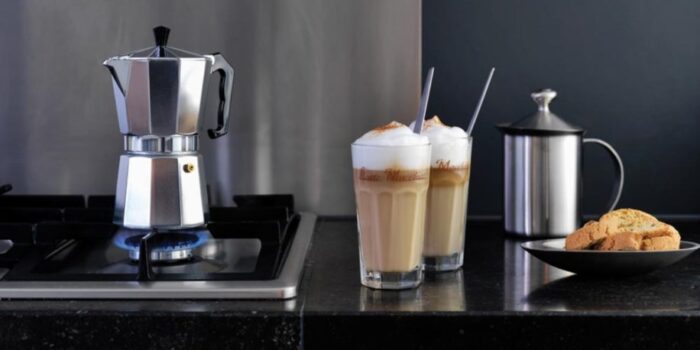
Coffee from a pod is incredibly convenient, but what if there’s a home barista hiding inside you, dying to come out? Then of course you’ll want to know what to look out for when making that ultimate cup of coffee. Esther de Wit from Leopold Vienna to the rescue.

What’s the first tip you want to give aspiring home baristas?
“Good preparation is the most important thing. And related to that: make sure you have the right equipment.”
And what would that be?
“Fresh coffee beans are key. No matter how good your equipment is, if you use a poor ingredient, you can never make something delicious with it. Just like cooking, really.”
Where can we find those coffee beans?
“Before the coffee reaches your cup, it has passed through countless hands and travelled thousands of kilometres. Coffee plantations are mainly found in high-altitude areas around the equator. In countries such as Guatemala, Ecuador, Ethiopia and Kenya, the arabica shrub thrives and once a year fills its branches with cherries that can develop into beans. Picking is done by hand, because the terrain is often difficult to navigate and, moreover, the farmer only needs the ripe coffee cherries. Only in Brazil, where the land is relatively flat, is harvesting done mechanically.”
From cherry to bean, how does that work?
““There are two methods for turning cherries into beans. With ‘washed’ coffee, the flesh is removed from the seed before the fermentation period, after which only the remaining layer of mucilage needs to be washed off. With the dry method, the cherries are laid out to dry with the flesh still on them, and the coffee beans gain extra flavour through the fermentation of the flesh. Before the beans are shipped, they are stripped of their outer husk, leaving a green coffee bean ready to be roasted.”
What about the roast level?
“The darker your coffee is roasted, the more bitter it tastes. Conversely, the lighter your coffee is roasted, the more acidic it becomes. All coffees have a certain degree of acidity and bitterness. This can be recognised by the colour of the bean. An unroasted bean is light greenish-blue in colour. When you roast the bean, its colour changes from yellow to light brown and eventually to very dark brown.”
How long do roasted beans stay fresh?
“The older coffee gets, the less flavour it will have. Ideally, you should use coffee that was roasted one to two weeks ago. And beans that hardly smell? You won’t taste much from them either.”
What kind of coffee beans should we buy?
“You can choose between a blend, a single origin or a single estate. A blend consists of coffee beans from several countries. Single origin is coffee from one country, while single estate comes from one farmer in one country. The more specific the origin, the more pronounced the flavours become. Above all, try different varieties to discover which one you like best.”
What effect does grinding have?
“Grinding is done to extract flavours from the coffee beans. The finer you grind, the more flavour you can extract; the coarser you grind, the less flavour you extract. Experiment with this, but do so carefully: if you extract too much flavour, your coffee becomes bitter; if you extract too little flavour, your coffee becomes sour.”
And how much water should we add?
“It’s not only about the quantity, but also the quality of the water. If, for example, your water contains a lot of limescale, you’ll taste the coffee less well. In that case, I recommend filtering your water beforehand.”
Is the way you pour the water important?
“Yes, because the way you pour the water over the coffee affects the final taste. If you use a brewing method in which you pour the water over the coffee by hand, the rule is: the faster you do this, the less time the water has to extract the right flavours from the coffee.”
And we haven’t even talked about the water temperature yet…
“That also plays a role. The hotter your water, the faster it extracts flavours, while colder water does this more slowly. There are now so many brewing methods to choose from that the length of time your water remains in contact with your coffee really depends on the method. That also determines how much is dissolved.”
Choices, choices…
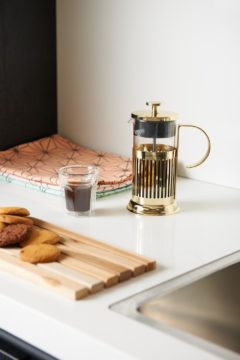
“There really is an abundance of choice. But why not try a cafetière, or French Press, as this old-school device is also known? It’s the ideal way to make a cup of coffee, exactly how you like it best!”
Also read:


