



Give Me Another Oyster #2
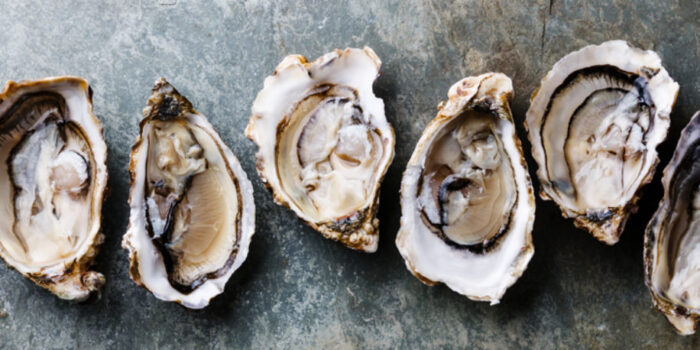
The oyster season has opened again, which means: time for an oyster. Especially now that fish shops are multiplying faster than rabbits and all of them have the iodine-rich shellfish on the menu. But which oyster should we choose? The flat one or the plump one? Oyster expert Marcus van den Noord of Zilt & Zalig shares his expertise on ‘the tear of the sea’.

Part 2: The Creuse or Pacific oyster.
Creuse is French for: ‘hollow’. This oyster originally comes from the Pacific, but the curved, plump oyster (in Latin: Crassostrea gigas) has since spread all over the world.
Marcus knows that the Creuses from Southern Ireland have the perfect shape. They are transported to various countries, where they are then ‘purified’ as local oysters. This is how it works: As soon as they are ready for consumption, they are caught and sold to foreign traders, who store them in concrete oyster pits or tanks. There, the oysters are stacked in crates in fresh seawater to purge.
A good Creuse oyster is the ‘tear of the sea’.
Marcus: “Dutch and French Creuses are rather inconsistent in quality. And the Dutch one, which is nowadays called the ‘Zeeland oyster’, is generally not very sustainable.”
With Creuses, the numbers mean exactly the opposite of the Flat oysters. That means: the larger the Creuse, the smaller the number. From no. 6 to no. 0.
Tear
‘When a Creuse has the right balance of minerals, it develops into the well-known “tear of the sea”,’ says Marcus.
At Zee/Land/Zilt by two-Michelin-star chef Edwin Vincke in Yerseke, you can eat oysters straight from the source. The accessible oyster shop is located directly on top of an oyster pit.
Text: Marjan Ippel


