



Where to Get Your Pays d’Oc Wine
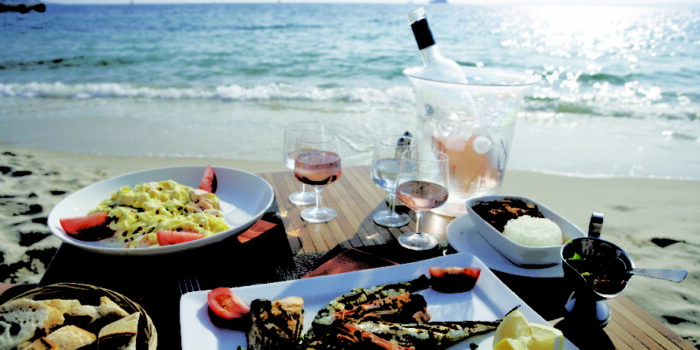
Okay, sure, everyone knows French Burgundy and Bordeaux more or less. But Pays d’Oc? Where on earth is that? And what grape is it, anyway?

We drink wine from Pays d’Oc more often than we think. Unknowingly, because usually the grape variety is printed much larger on the label than its region of origin. Pays d’Oc – actually the South of France’s Languedoc-Roussillon – mainly produces varietal wines. These are wines made with just one grape variety, and they are often presented as such.
The wines are becoming increasingly interesting, and despite that, they are still pleasantly priced.
So-so swill
Until the 1980s, this Mediterranean Sea region was the place for mediocre swill. This was where unpretentious bulk wine came from, but at a pleasantly Dutch price. These days, however, everything is different. Languedoc-Roussillon is now hip; it is constantly renewing and rejuvenating itself. The wines are becoming increasingly interesting, and despite that, they are still pleasantly priced.
What does the label tell you?
In the Old World of Wine – basically all the classic wine-producing countries within Europe – wine is usually identified by the name of the region. And specifically not by the grape. Think of the French Côtes du Rhône, Champagne and Burgundy. Or the Italian Barolo and Chianti. Do you immediately know which grape you’re drinking?
Today’s Pays d’Oc prefers to follow the path of the young wine-producing countries. The New World – for convenience, all wine-producing countries outside Europe – exports almost exclusively wine on which the variety is prominently stated. Such as Argentinian Malbec, New Zealand Sauvignon Blanc and South African Pinotage. Much easier for the consumer. And it sells.
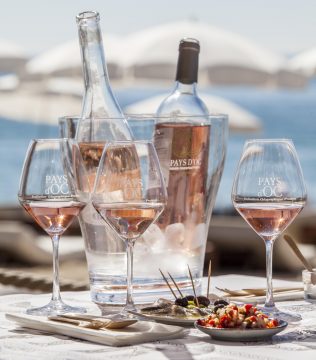
Mediterranean flair
The environmental diversity of the immense Languedoc-Roussillon region – such as the influence of the sea, differences in elevation, plenty of wind, stony soils or red clay – also makes producing varietal wines interesting. A trip through the region shows just how diverse it really is. And that influences the wine’s final flavour. As a modern French winemaker, you obviously want the most suitable grape variety for your land. And – given the high export figures – preferably one that also performs well internationally, such as Cabernet Sauvignon, Merlot or Chardonnay. The sultry southern climate gives those grapes an extra touch of Mediterranean flair. And that sells too.
You might suddenly find yourself drinking an Italian Sangiovese or a Spanish Albarinõ in a light South French jacket
Those international varieties may not always simply be used under France’s strict wine legislation. That is why the protected quality designation Vin de Pays d’Oc has existed since 1987, nowadays known as Indication Géografique Protégée (IGP) Pays d’Oc. For beautiful wines originating from – and characteristic of – Languedoc-Roussillon. Wine that is no match inferior to the ‘fancier’ French appellations, but is assessed a little more flexibly when it comes to the rules. And so you might suddenly find yourself drinking an Italian Sangiovese or a Spanish Albarinõ in a light South French jacket.
Miss WineLane’s lovely Pays d’Ocs:
Domaine d’Aigues Belles
available from Thiessen, among others
Domaine La Provenquière
available from Wijnhandel Topido & The Wineshop, among others
Les Domaines Auriol
available from Neerlands Wijnhuis & Wijndijck, among others
Château de Pennautier/Vignobles Lorgeril
available from Okhuysen, among others
Laurent Miquel
available from Verbunt Wijnkopers, among others


