


Hey pizza lover, have you heard of pinsa yet?
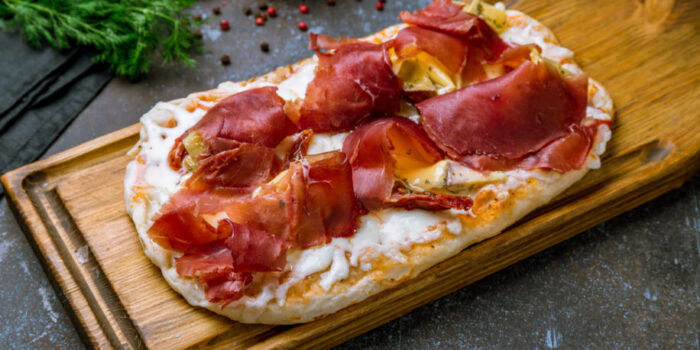
Is it a pizza? Or maybe a focaccia? Nope. Pinsa is the name, and this Roman upstart is going to conquer the Netherlands, just you wait.

The first pinserias appeared around three years ago. In Rotterdam, for example, Dalgrano Pinseria opened its doors; unfortunately, it has since closed, but in Amsterdam, pinseria Pinsa has already won several awards, and you can also find pinserias in Leidschendam and Tilburg.
My first introduction to pinsa was at TonTon Club 3 (tip: the one with saffron pumpkin sauce and pecorino and the one with mortadella and pistachio are excellent). To be honest, at first glance they look like ‘ordinary’ oblong pizzas. But as soon as you eat them, you immediately notice that they are much airier and lighter.
Pizza and pinsa: the differences
This is partly due to the composition of the dough. Unlike pizza dough, pinsa dough is not made solely from wheat flour, but from a combination of wheat flour, soy flour and rice flour. ‘The soy flour gives the dough its crispness. The rice flour helps retain water and creates airiness during baking. Dried sourdough is also added for flavour,’ writes expert Stefan.
Pinsa dough is also much ‘wetter’. ‘Ordinary’ pizza dough contains around 53 to 65% water, while pinsa dough contains as much as 75 to 85%. This high moisture content, combined with an extra-long rising time (around 72 hours), makes pinsa dough easier to digest. And that’s not all: thanks to the combination of flours, the rising time and the moisture content, the dough is also lower in calories and carbohydrates.
How to make pinsa
How do you make it? That’s a bit of a challenge. Premixes are available in Italy, but they’re difficult for us to get hold of and the recipe is secret. Fortunately, this recipe will get you a long way. Or you could simply visit one of the pinserias that the Netherlands already has to offer.
Also read:


