Holiday reading

Before we know it, we’ll be lying on the beach again, here or abroad, with a book. But which book? FavorFlav selects food books to pack in your holiday suitcase.

When we’re not cooking, we’re eating. And if we’re doing neither, then we’re talking about food. We think about food, fantasize about food. And on holiday by the pool or beach, we read about food.
A few suggestions:
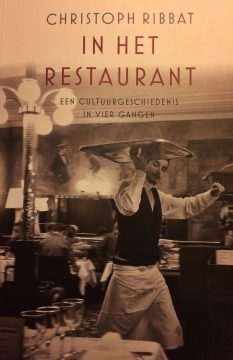
Christoph Ribbat – At the Restaurant; A Cultural History in Four Courses, published by Atlas Contact.
An enjoyably readable book by a German former pop-music critic, now Professor of American Studies at Paderborn University, and foodie. In a kaleidoscope of quotes from literature, biographies, socio-scientific studies, diaries and restaurant reviews, he sketches the story of the rise and changing function of the restaurant since the 18th century in this ‘docu-novel’. And it’s a feast to read. Because restaurants are certainly not just about the food.
Stephanie Danler – Sweetbitter, published by Prometheus.
New Yorker Stephanie Danler also describes what goes on in restaurants. But she does so in novel form. Drawing on her own experiences at the hip Union Square Café, where she worked in the service until she was discovered as a writer. ‘About the chaotic, gruelling, fascinating life of the hospitality industry against the backdrop of ruthless, noisy New York,’ according to the publisher.

Ilja Gort – The Volcano, published by Slurp Publishers.
Our country has a few professional food novelists, of whom Ronald Giphart and Ilja Gort are the best known. Food, but especially wine, also plays an important role in Gort’s newly released latest novel. His books are real page-turners. This one, about a winery in a sleepy French village against the backdrop of a volcano, is no exception.

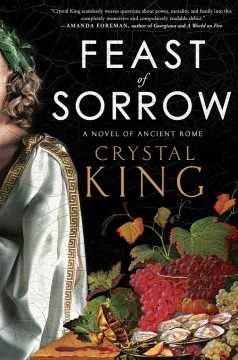
Crystal King – Feast of Sorrow: A Novel of Ancient Rome, published by Touchstone (English).
If there’s one book that will definitely be coming with me in my suitcase, it’s this ‘upstairs/downstairs drama meets food porn meets historical fiction’ (according to an American reviewer) about the cuisine of ancient Rome. It tells the story of the slave who inspired the first cookbook in the world, and of his master Marcus Gavius Apicius, who is credited with writing it and became world-famous because of it, right down to the present day. In an entertaining way, you learn everything about ancient Roman food and eating habits during the reign of Emperor Augustus.