


Hot Weather, Cold Noodles
When it’s cold outside, we eat stamppot. When the weather is warm, salad makes an appearance. In Japan, they do things subtly differently: warm noodles in cold weather and vice versa. In tropical temperatures, preferably picked from an icy mountain stream with chopsticks.

We won’t soon become as sophisticated as the Japanese when it comes to food. They have noodles for cold winter days and noodles for warm summer days. The latter are, of course, eaten cold. Ice-cold, even.
Toppings
If the noodles are thick, you call them hiyashi chūka. After cooking and cooling them, you pile them high with cold toppings, neatly cut into equal pieces or strips. From egg and surimi strips to cucumber, tomato and shrimp. Then you pour a vinegar dressing over them.
Using their chopsticks, the Japanese pick sōmen noodles out of an ice-cold mountain stream.
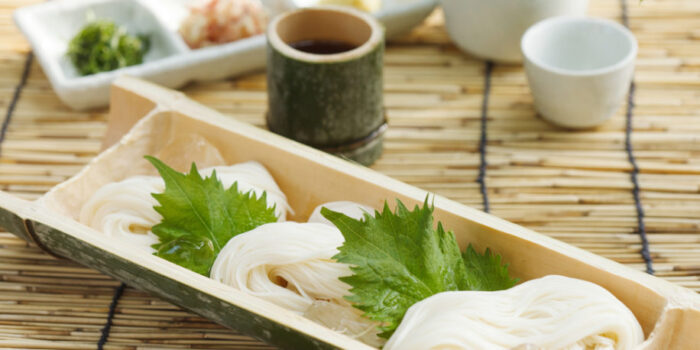
If the snow-white wheat noodles are extremely thin, with a diameter of less than 1.3 mm, you have sōmen noodles. In summer, some Japanese restaurants serve nagashi-sōmen (flowing noodles). Ice-cold water flows through a bamboo stalk sawn in half lengthwise, stretching the entire length of the restaurant. The sōmen noodles are sent rushing through it.
Mountain Water
It takes quick fingers to catch these noodles with your chopsticks in time. If you manage, you dip them in a cold sauce such as tsuyu (soy sauce with kombu) and eat them.
Even better is when the noodles float in a picturesque mountain stream and the Japanese have to do their best to pick them out of the turbulent mountain water with their chopsticks.
Gadget
If you happen to have neither of those at hand, there is an ingenious gadget that simulates the commotion of a stream. Something like the Aquaplay water channel you used to play with on scorching hot days.


