



How to: make sourdough bread
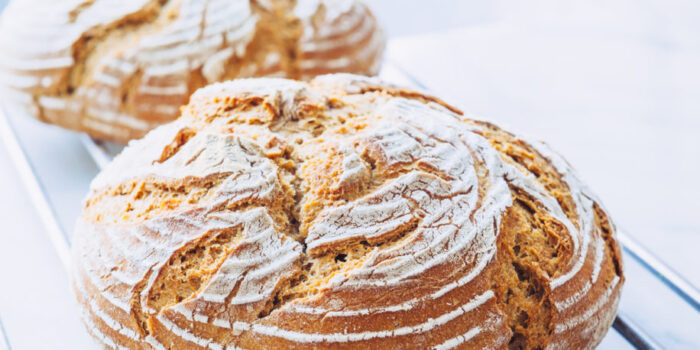
Sourdough bread is the holy grail of bread baking. It may seem a little intimidating, I get it. I bake a lot of bread, but I’ve only just become ready for sourdough myself. With these steps, your first sourdough bread will be a success.

It all starts with a sourdough starter. Bread needs to ferment and rise, which gives it flavor and air bubbles. You can start this process with yeast, but you can also do it with a sourdough starter. A sourdough starter is nothing more than flour and water. By letting it sit and allowing air to get to it, it ferments and ‘wild yeast’ develops. Add some of this to your bread and fermentation can begin.
Water and flour—that sounds easy enough, but it does take a bit of work. You have to ‘feed’ your starter daily by adding more water and flour. It isn’t difficult, but it does require a lot of attention. Your starter will be ready to use after about a week, and if you maintain it properly (read: keep feeding it), it will last for years. I even know someone who has a 150-year-old starter. Pretty cool, right? Here’s how to make it:
What kind of flour?
In principle, you can use all kinds of flour. Many recipes recommend using some white flour and some whole-wheat or rye flour. I just use white flour myself, but you can vary this. As long as you use equal amounts of flour and water. It’s best to weigh everything carefully for this.
Day 1
Use a 1:1 ratio of water to flour. Start with, for example, 50 or 100 grams of each. Mix this well in a preserving jar or bowl (plastic or glass). Stir until the flour and water are well combined. Also stir thoroughly along the bottom so no loose pieces of flour remain. Cover with a clean tea towel and leave it in a warm place in the house (between 21 and 23 °C).
Day 2
If all goes well, you’ll now see a few small bubbles. Weigh out the same amount of flour and water again and add it to the starter. Stir well and set it aside again. It now looks like a sticky batter.
The rest of the week
Continue repeating this process daily. On the third day, the starter should begin to smell slightly sour, and on the fourth day you should really see lots of bubbles and the sour smell should have become stronger.
Ready!
The starter will be ready on day five, six, or perhaps seven. When you stir the starter, it feels looser than on the previous days, and there are small bubbles throughout the starter. The smell is quite strong and sour. When you taste it, it should taste slightly vinegary. If so, you can use it.
Baking
So how do you use that starter? Add the starter to the dough you’re going to make; in principle, it can be used for anything. This sourdough bread from Tartine Bakery is one of my favorites. Once you’ve mastered it and serve it to your guests, they won’t know what hit them. But you can also make focaccia, or croissants and pizza dough with it. Now that you have your starter, the world of bread is at your feet.
Read also:


