



How to make the very best hamburgers in 5 steps
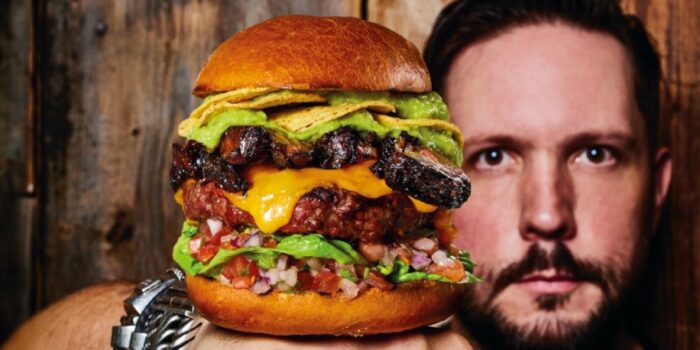
Everyone loves hamburgers. This quick bite, born to be snacked on straight from the hand, is surely the tastiest summary of the food groups in your hand. Before you run straight to your BBQ, here’s a roadmap from Jord Althuizen to the best burger ever that you can make yourself. Because if anyone knows how to grill a killer burger, it’s Jord!

Baking
With the perfect burger, the burger bun fights just as hard for the honor as the meat patty. The burger bun not only has to taste good, it also has the task of keeping everything neatly together during ferocious bites. A bun with enough firmness that doesn’t collapse when juices are released and sauces drip is therefore essential. However, don’t go for a bun that’s too hard: by the time you’ve bitten through the crust, the filling will be lying on the street. Toasting your bun is essential: it strengthens the bun, slows the absorption of juices and sauces and adds a beautiful toasted aroma.
Grinding
You make the best-quality burger yourself by putting the perfect mix of meat through your grinder. Aim for a burger with 80% lean meat and 20% fat, with a full, pronounced beef flavor. With a lower fat percentage, you’ll have a dry burger; with a higher fat percentage, you’ll get too much shrinkage as the fat melts away. To create the perfect burger, you can use, among others, the following cuts to compose your optimal blend: Chuck steak (beef neck, moderately fatty) and round steak (beefsteak, rump, both very lean): good lean cuts of meat with a medium to very low fat content but a pleasant beef flavor. They often form the lean basis of a burger blend combined with one or two other fattier, more pronounced cuts. Brisket (point end, high in fat): has a very pronounced beef flavor and a beautifully high fat content, resulting in a rich, full, juicy burger. Boneless short rib (beef ribs, very high fat content): very high in fat and flavor, an expensive ingredient but one that delivers tremendous results in flavor and texture. Skirt (diaphragm or plate) and hanger steak (onglet): both lean cuts of meat with a beautiful, coarse grain and a very pronounced, deep flavor. A good burger mix could be, for example: 50% chuck steak for the base, 25% brisket for the fat content and 25% beef ribs for fat and flavor.
Shaping
Shape the burger patties loosely by hand and don’t press them too firmly. Always make the burger slightly larger than your bun, so it remains nicely visible and present with every bite after shrinking on the grill. One trick is to make an indentation in the center with your thumb; this prevents shrinkage and keeps your burger from doming instead of remaining nicely flat.
Seasoning
Always season a burger with salt and freshly ground pepper only after shaping, and just before it goes on the grill. Salt draws moisture from your meat and partially dissolves protein, resulting in a firm meatball instead of a beautiful, loose, crumbly burger.
Smashing
If you’re going for a smashburger—a thin hamburger that you cook on a griddle or in a skillet for maximum caramelization—only press the meat firmly onto the cast iron at the beginning. Never press down on a smashburger or regular burger while it’s cooking; you’ll squeeze out the melting fats and juices.
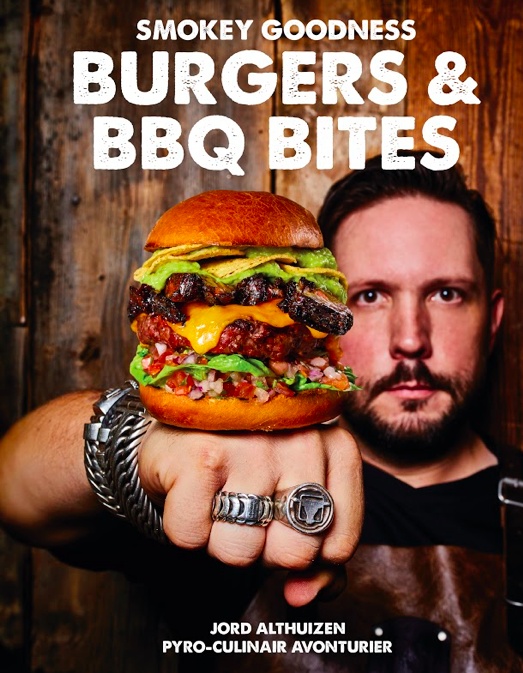
Title: Smokey Goodness – Burgers & BBQ Bites
Author: Jord Althuizen
Price: €22,50
Publisher: Kosmos
Also read:
- Recipe: the Elvis Burger, so wrong it’s right
- Recipe: Chili cheese dogs
- Recipe: the nachos of your life


