



How to: poach fish
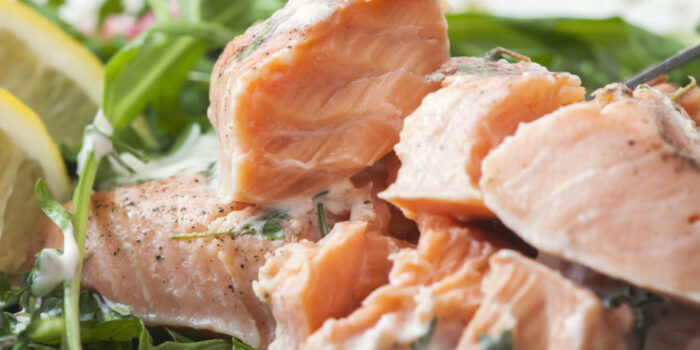
When preparing fish, you need to pay close attention, as the flesh dries out quickly. There is a solution for perfect fish: poaching. The best method for serving the most tender fish, time and time again.

Poaching is gently cooking food in liquid at a temperature just below boiling point. Poaching keeps fish deliciously juicy. The cooking time depends on the thickness of the fish. A thin fish fillet is done in three to six minutes. A thick fish steak or a whole fish takes eight to ten minutes. Make sure the liquid you poach in does not boil, as the fish will then fall apart and become dry.
Leave the skin on
Do not remove the skin from the fish. The skin serves a protective function and adds extra flavor and juiciness. A good result depends on cooking evenly and in the right way. Make sure your pan is wide and large enough, and submerge the fish in the liquid. A shallow pan makes it easier to remove the fish.
Preparation
Heat your poaching liquid with various herbs and let the fish gently cook in it; do not boil. Leftover liquid is ideal for making a fish sauce. Fish is poached in court-bouillon. Court-bouillon is a seasoned and flavored stock made with various types of liquid; you can make different varieties. Also add a bouquet garni to your poaching liquid: a bundle of herbs.
Let the court-bouillon cool first, because fish flesh contracts in boiling liquid. Wrap large pieces of fish in a cloth. Place the fish—possibly on a rack—in a large pan. Pour the court-bouillon over it and bring the liquid to temperature. The fish is done when it feels firm yet supple. If you do not have very much court-bouillon, you can cover the fish with a clean cloth or a celery leaf to prevent the top from drying out. Do not throw away the court-bouillon; strain it and use it for a soup or sauce. Store it in a sterilized preserving jar and use it several times. The aroma and flavor only improve.
Court-bouillon ‘eau de sel’
In other words, salted water. Ideal for small fish and small cut pieces that you start in cold water (fifteen grams of sea salt per liter). Simmer a bouquet garni of thyme and bay leaf along with it, and remove it once the liquid has cooled completely.
Court-bouillon au lait
Put a chopped onion, a small sprig of thyme, salt and pepper in a pan and pour in a mixture of half water and half milk. Do not add too much liquid; the fish should be just covered. Add a few slices of lemon to the milk. This stock is also suitable for poaching flatfish, such as brill or turbot. Also try it with smoked or dried fish, such as smoked haddock or salt fish (in this case, do not add salt).
Court-bouillon au vin
Gently simmer the following ingredients for fifteen to twenty minutes: two and a half liters of water, half a deciliter of white wine, 50 grams of chopped carrot, 50 grams of chopped onion, a sprig of thyme, three bay leaves, a sprig of celery leaves, a sprig of parsley, 30 grams of coarse salt and ten grams of peppercorns. Use more wine for a fruitier stock and reduce the amount of water. Use red wine for lean fish with white flesh that is served cold (for example, cold sea bass). Use white wine when poaching shellfish and all other types of fish.
Poaching in oil
Once you have mastered poaching with court-bouillon, also try the oil version. Use a thermometer to check that the temperature remains low. No matter how delicious it is, you do not want to deep-fry your fish. Poaching in oil produces silky-soft fish that falls apart beautifully. Also try it in the oven at a low temperature. Here too, you can add things such as thyme and peppercorns.


