



How to properly clean a knife block
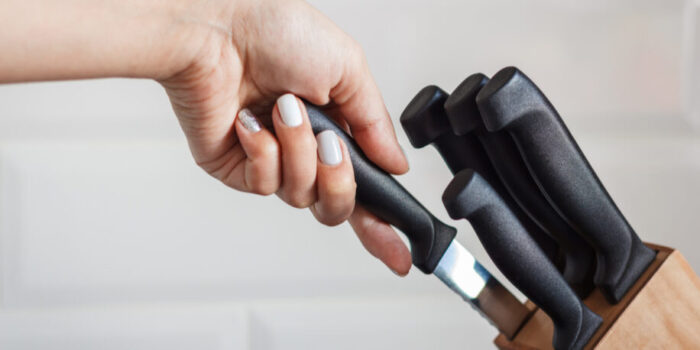
If you have a knife block, you’re doing really well if you clean it regularly. Compliments! But many people who own one aren’t that diligent about it, and that leads to bacteria and gunk in those dark crevices. Not very fresh! Here’s how to tackle it:

Full disclosure: I’m not a fan of the knife block phenomenon, nor of the knife sets that often come with them. So in a moment we’ll explain how to clean those deep crevices, and since chlorine is involved, you already know how seriously dirty it gets in there. Ew. And such a knife set often contains a number of knives you don’t use anyway; a waste of money.
Only knives you actually use
For that amount of money, you’d be better off buying two or three individual knives that you’re genuinely going to use, such as a beautiful Japanese or European chef’s knife or a sturdy cleaver. But if you do have a knife block anyway (or want one), we’ll support you, of course! With this cleaning routine. Assume that you’ll do part of it one day and the rest the next day. (Or just ask for one of those handy magnetic strips for your birthday after all – much easier to clean ?)
How to properly clean a knife block
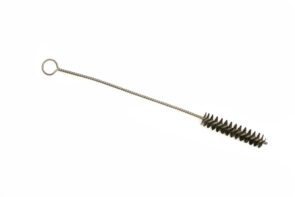
- What you need: soapy water, a dish brush, a cleaning brush or pipe cleaner, a dough scraper (if you have one), a clean dishcloth, a drying cloth, chlorine and water.
- Take the empty block, hold it upside down and shake out any crumbs.
- Turn it upright again and use the cleaning brush to remove any remaining crumbs.
- Clean the outside of the block with soapy water and a brush or sponge. Make sure not too much water gets into the slots.
- Wipe it with a damp dishcloth.
- If you have a dough scraper, run it along the sides to remove as much soap and any loosened dirt as possible.
- Now dry the block with a clean, dry cloth. Leave it to dry overnight.
- The next day, make a cleaning solution by mixing one teaspoon of chlorine into one liter of water in a bowl, or in a refillable spray bottle (always useful!).
- Repeat the cleaning of the outside, this time with the chlorine solution.
- Dip the cleaning brush into the solution and then run it through the slots.
- Dry the block as thoroughly as possible with a cloth again.
- Now leave the block to dry for at least twelve hours (preferably longer) before sliding the knives back in.
- It took some time, but now you can be sure that your knives will once again slice through tomatoes—or a perfectly cooked steak—spotlessly clean!
Also read:
- 7 handy cleaning tips for your kitchen
- In three steps: how to get your Airfryer sparkling clean again
- How to remove that giant block of ice from your freezer
Source: The Kitchn


