



The best chef’s knife for you? That’s highly personal
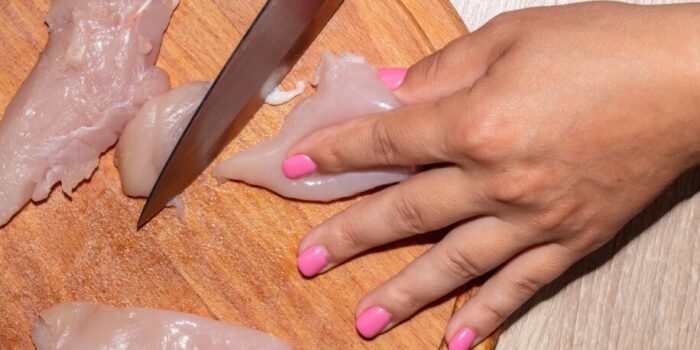
In your head, you may hear us nagging in your ear all the time that you should cook this, make that, buy this and skip that. But we’re also the first to admit that with many things, it really is a matter of personal taste. (But coriander is fantastic ;). The same goes for ‘The Best Chef’s Knife’…

It doesn’t exist, actually. What works for me may not work for you or your aunt. An article about it in Bon Appétit made us realize this once again and prompted us to take a deeper dive into the subject of chef’s knives. Or in this case: which suits you better – a Japanese or a European knife?
Wantwantwant
For me, it’s absolutely clear that I get very greedy when it comes to Japanese knives. I think they’re beautiful and exotic, they give me visions of endless platters of sashimi, and that makes them fascinating to me. But when I remember what kind of home cook I am—namely, a clumsy one—such a refined knife may not be such a good idea for me after all…
There has to be a difference
The most obvious differences between these two types of knives are explained in meticulous detail by De Meesterslijpers. They don’t consider two aspects to be pros or cons because they depend too heavily on personal preference: the weight of a knife in your hand and the shape of the handle. But when it comes to the blade, there’s plenty to say.
Hard vs. soft
One of the biggest differences between these two beautiful types of knives is the hardness of the steel. German knives (to use those as a European example) are made from softer steel than traditional Japanese knives, which (ironically enough?) makes them more durable and less prone to damage than Japanese knives. The harder the steel, the less flexible—and therefore the more breakable and brittle—it is. Put simply: if you regularly want to cut hard things such as pumpkins for soup, or occasionally chop through a bone, you’re better off with a sturdy German knife.
Thick versus thin
These differences in hardness also allow for differences in blade thickness, as well as the sharpening angle and therefore the sharpness. Because Japanese knives can have thinner blades thanks to that hard steel, you feel less resistance while cutting. This is also very pleasant for finer cutting work.
Sharpened a certain way
What also makes the sharpening of a Japanese knife special is that truly traditional types are sharpened on only one side of the blade, making them even sharper but also more delicate. This also means that whatever you’ve just cut is less likely to stick to the blade, which is useful for sashimi, for example (fish, agreed? Let’s skip the chicken sashimi). But Japanese knives sharpened on both sides are also readily available and can be used in the way you’re probably accustomed to.
Craftsmanship is better
In short: ideally, go to a brick-and-mortar specialist shop where you can hold a knife and feel what ‘works’ for you, and ask for advice. These shops also want you to know that you definitely don’t need to show up with a big bag of money. For just under thirty euros, you’ll already be considerably better off than with an Ikea knife, and believe us (and them): it will make cooking a thousand times more enjoyable.
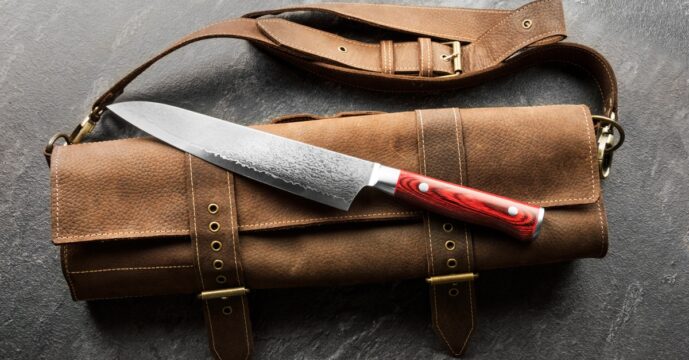
And to put it bluntly: be honest about what kind of home cook you are. If you’re a stickler for details and take good care of your things, you may well be the perfect candidate for a beautiful Japanese knife. And if you want a no-nonsense knife that you don’t have to fuss over too much, a robust European knife may be more your style!
Also read:
- This is what you need to sharpen your knife properly
- Is a cleaver the knife still missing from your collection?
- Japanese dog turns out to be a true foodie
Sources: Meesterslijpers, Bon Appétit


