



How to: regrow vegetables
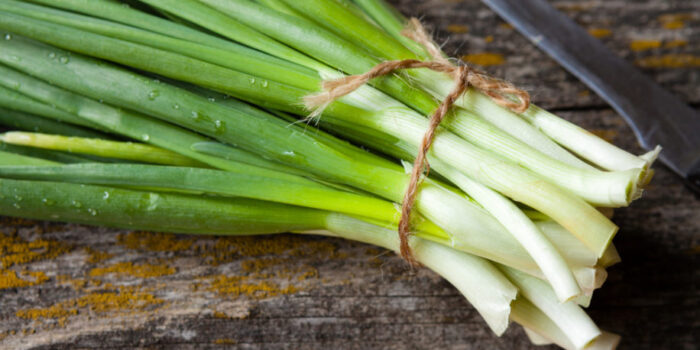
When cooking, we throw things away far too often and far too easily. There’s no need to, because there are plenty of kitchen hacks that mean those leftover herbs or avocado pits don’t have to end up in the trash. The same goes for the ends of these vegetables. Regrow them and you’ll have an endless supply.

This method is as simple as can be, and you really don’t need green fingers or a gigantic vegetable garden. What do you need? A glass, water and a little sunlight.
Spring onion
We previously shared the brilliant chef’s tip of not throwing away the cut-off ends of spring onions, but regrowing them by placing them in a glass of water. It really is the gift that keeps on giving; before you know it, the onion will have green stalks again, as long as you don’t cut off too much of the bottom. Cut the new green tops into rings and add them to tuna salad or an omelet.
https://www.instagram.com/p/B_0m9O7pnyC/
Lettuce
Don’t throw away the bottom of your romaine lettuce either. Put the core in a glass of water and let the lettuce grow slowly. As soon as it has leaves, you can eat it. You can actually do this with any head of lettuce, but romaine is the easiest because it’s fairly sturdy.
https://www.instagram.com/p/B_t-Nwxoc4U/
Garlic
Are green shoots starting to emerge from your bulb of garlic? Separate the cloves and place them in a shallow layer of water (don’t drown them!). You can eat the green shoots: they taste like a combination of spring onion and chives and are perfect for frying along with onion in almost any dish. Just make sure the green stems are longer than 8 centimeters, because the shorter they are, the more bitter the stems—and therefore the less tasty.
https://www.instagram.com/p/B-o-M_ugAXI/
Leek
Leek, the older brother of the spring onion, grows in the same way as its younger sibling. Place the end of the leek in water, just like the spring onion, and within about a week you’ll see a new section of leek ready to cook with.
https://www.instagram.com/p/B_08nQTjhv_/
Tip: replace the water in which the vegetables are growing regularly. So, as soon as the water looks brownish or greasy and starts to smell a little, it’s time to change it.
Also read:
- Did you know these vegetables grow this way?
- Shit: we really do have a serious banana problem
- Dreaming of a life as a winegrower? Then this is the first step toward making your own house wine


