


Inspection service discovers: ecological cleaning products contain junk
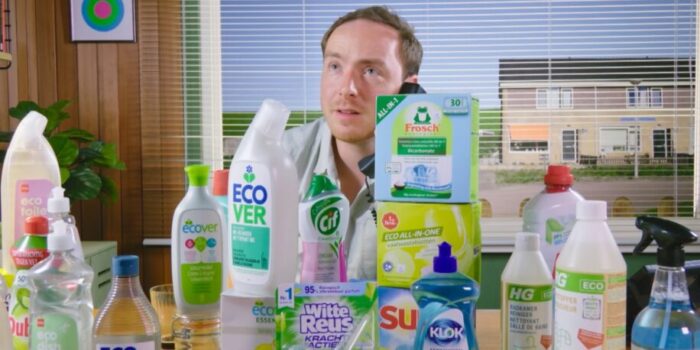
We all know that chlorine, degreaser or toilet unblocker aren’t exactly good for ‘the environment’. But with those ecological alternatives, that’s a different story, right? Keuringsdienst van Waarde investigated, and to put it mildly, their conclusion can be called remarkable…

Cleaning is probably everyone’s least favorite chore. Any cleaning aid is therefore more than welcome. And while cleaning products used to often be made from animal or vegetable fat, a very different alternative is now frequently used.
Petroleum in cleaning products?!
We mainly know petroleum as the raw material used for the gasoline in our cars. Nowadays, it is also frequently used in cleaning products. And petroleum is certainly not environmentally friendly; its use or processing releases many harmful substances. Knowing how polluting petroleum is, you would expect it not to be used in ecological cleaning products.
The reality is different, however, as the Keuringsdienst. discovered.
Ecological: it seemed so logical
During the investigation, they quickly discovered that many eco-products do in fact use petroleum or chemical processes that can also be extremely polluting—even brands that claim to use only natural ingredients have to process them using a chemical process that is still polluting.
To find out whether the cleaning products were actually ecological, a test was conducted together with the Netherlands Institute of Ecology. Algae were exposed to a diluted version of the products. If the products were genuinely ecological, the algae should have remained alive. However, the test showed that none of the products left any algae alive. ‘A shocking result,’ according to Lisette de Senerpont Domis, an ecologist at the Netherlands Institute of Ecology.
How is that possible?
After this kind of research result, you naturally wonder how that is possible. Why are these products allowed to carry the term ecological? As simple as it is tragic: the term ecological is not a protected certification, meaning no one checks whether the ecological claims on packaging are actually ecological. Brands are often eager to take advantage of this.
So you cannot simply assume that the products you buy are genuinely better for the environment.
If you are now completely done with those supposedly ecological cleaning products, clean the way our grandparents did; half a lemon and a splash of vinegar will also get you a long way.
Read also:
- 7 handy cleaning tips for your kitchen
- But wait: what exactly is Skyr?
- I bought the super-hyped ‘happy’ Scrub Daddy sponge and here’s what I think of it
Source and image: Keuringsdienst van Waarde/KRO-NCRV


