



Kerrie and curry: one and the same or worlds apart?
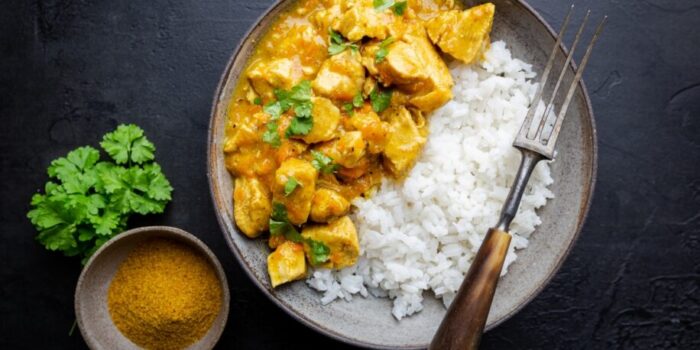
The Keuringsdienst van Waarde is looking for answers to the most pressing questions we have. Including this one: what exactly is the difference between kerrie and curry, apart from those few different letters? Do we use the words interchangeably out of ignorance? Or is there a deeper story behind them?

A little history. Kerrie originally comes from India. The word is derived from kari, meaning ‘spiced sauce’. The composition of kari is not the same throughout India. Still, you can always find one ingredient in it: kari patta. These are the leaves of the curry leaf tree. In addition, the spiced sauce always contains a blend of spices.
In India, they call such a blend masala. The best-known blends — which you probably know — are garam masala and tandoori masala. Here in the Netherlands, we call such a spice blend ‘kerrie’. How did this exotic mixture find its way into our not-so-exotic (or, frankly: very unexotic) cuisine?
Curry powder
That was thanks to the British. They were colonizers of India for a long time. The British loved Indian kari; they wanted to have it at home too. They could enjoy a nice change from Fish and Chips and Shepherds Pie. So they made their own spice blend in powder form, which they called curry powder . Curry powder crossed the North Sea to our little frog-shaped country, and that is how we came into contact with the mixture too. We just don’t call it curry powder, but kerrie.
Kerrie in the supermarket
So kerrie is that blend of spices and herbs. Exactly which spices and herbs does it contain? That can literally vary from jar to jar. Just read the labels on several jars of kerrie in different supermarkets. Chances are that not a single label lists exactly the same combination of spices and herbs. Still, according to the Keuringsdienst van Waarde, there are spices you often see, such as turmeric, coriander seeds, cumin and black pepper.
But kari patta, the curry leaves? They are virtually impossible to find in supermarket blends.
Red kerrie, yellow kerrie, wet kerrie, dry kerrie…
In India, they call it dry masala; in the Netherlands, we call it kerrie. When we talk about kerrie here in the Netherlands, we immediately think of yellow kerrie. That is the type of kerrie most commonly used here. We are less familiar with red kerrie, even though it is just as popular in India as yellow kerrie. How do yellow and red kerrie get their colors? The yellow comes from turmeric, the red from red peppers. So yellow kerrie blends always list turmeric on the label. Check it at the supermarket.
Then there is wet masala. You mainly see that in southern India: the region where the dish curry (which we eat with rice or naan bread) comes from. Here, we call it curry paste. In other words: we call the sauce curry, while we call the dry spice and herb blend (masala) kerrie. In England, it is all one and the same. There, curry refers to the spice and herb blend, the sauce and the dish. Anyway, I’m craving curry now. FavorFlav’s Wieke recently revealed the secret ingredient for making the perfect curry, so I’m going to look into that.
Also read:
- Recipe: naan with curry filling
- This ingredient makes your Indian dishes taste authentic
- Fierce battle over butter chicken in India: who invented this popular dish?
Source: KRO/NCRV


