



Koji Rice
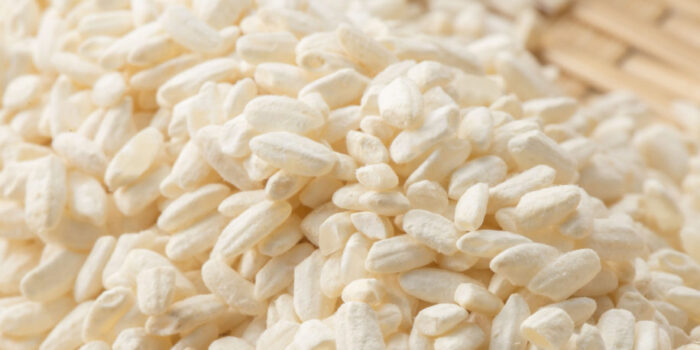
You need this koji rice to make Mister WhatEatsUs’s miso.

What do soy sauce and sake have in common? You can probably guess that the answer has something to do with fermentation. And indeed, these completely different foods are the product of the same fungus: Aspergillus oryzae, also known as Koji-kin. This fungus is the basis of a long list of Japanese fermented foods, such as various types of soy sauce and miso, as well as the Japanese rice wine sake, the non-alcoholic sweet rice drink amazake, and the sweet rice wine mirin.
Ingredients
300 grams white rice, preferably not parboiled. Check the packaging. Some types of rice have already been steamed. You only need to rinse and drain them, after which you can inoculate them directly.
0.5 grams (approximately half a teaspoon) koji-kin starter culture (koji fungus or ‘sake yeast/starter)
Timeline: ferment: 48 hours
Method
Rinse the rice until the rinsing water runs clear. Leave it to drain for fifteen minutes.
Glassy and soft
Steam the rice for approximately forty-five minutes. This works better than boiling. Boiled rice quickly becomes wet and mushy during moulding, preventing the fungus from doing its job properly. The rice should look glassy and feel soft and slightly rubbery when you bite into it.
Leave to cool to room temperature.
Koji-kin
Mix the half gram of koji-kin with the rice and leave to ferment uncovered for 48 hours in your fermentation chamber at high humidity and approximately 25 to 35 ˚C (but Koji-kin isn’t very demanding). Stir through a few times with a clean fork; the fungus needs air. After fermentation, the rice will be completely covered in white mould. Stop as soon as you start seeing green/yellow spots. These are spores from the fungus.
Now you can start on the miso.
Note from MisterWhatEatsUs
As an alternative to a fermentation chamber, Sander Katz describes a simple and inexpensive mould box in his fermentation bible ‘The Art of Fermentation’, which we have had good experiences with. Take a plastic storage box filled with a few centimetres of water. Place an aquarium heater in it and let the shallow, low plastic containers holding the rice to be moulded float in the water. Wrap the lid in a tea towel or towel so that condensation from the lid does not drip into your rice. An electric yoghurt maker works fine too.
About Rot
Mister Wateetons
€29.95
Good Cook publishing house


