



Making ricotta with three ingredients
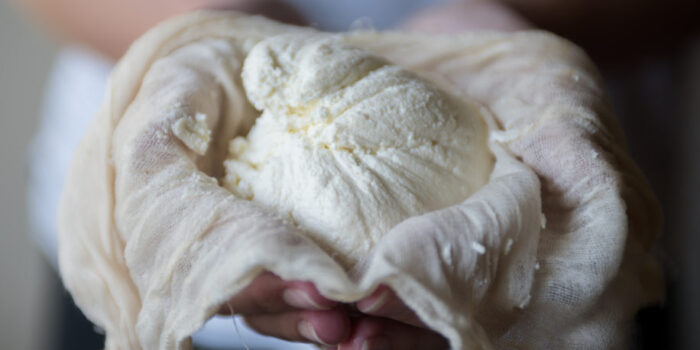
Making ricotta at home is so easy that from now on, you’ll have no reason not to do it. And it’s genuinely a thousand times tastier than that stuff you get at the supermarket. Trust me, you’ll want to eat this straight from the bowl with a spoon.

I’m certainly not snobby about supermarket products, but I find ricotta from one of those tubs downright disgusting. It’s grainy and dry and fine for stirring into cake batter or using as a ravioli filling, but that’s about it. When I’m in Italy, I can’t stop eating ricotta. There it’s creamy and jiggly, almost custard-like, and sometimes even still warm. In Amsterdam, I’ve never found a place where you can get fresh ricotta (if there is one, please tell me), so there’s only one thing to do: make it yourself.
Cheesecloth
I think I bought cheesecloth two years ago, intending to make my own ricotta. I knew how to do it and that it wasn’t difficult, but it still felt like a huge project, so the cheesecloth stayed in its packaging for far too long. But just like with most recipes: once you’ve made it for the first time, you realize how easy it is and suddenly make it all the time. Well, at least that’s how it works for me.
How, then?
Seriously: make it. The only things you need to buy are milk, lemon or vinegar, salt and cheesecloth. Heat the milk together with the acid and salt until it starts to curdle. Pour the whole lot into a sieve lined with the cheesecloth, and after 30–60 minutes you’ll have ricotta. I use this recipe, and it always works. How cool is it to be able to tell your guests that they’re eating homemade ricotta? If you make this for a date, you’re practically guaranteed success. The longer you keep the ricotta, the more moisture drains out, so eat it within 1–2 days.


