



More and more theft due to self-checkout tills: this is how supermarkets are fighting back
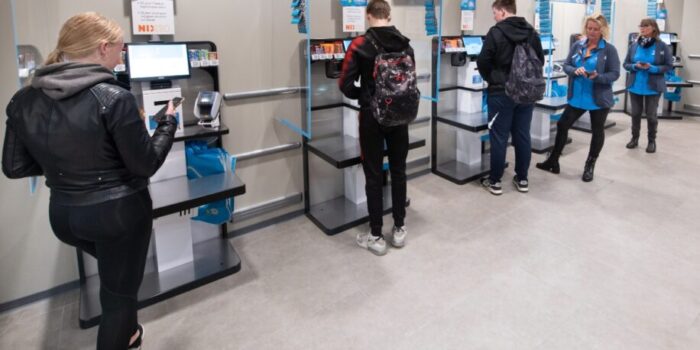
Self-checkout tills at the supermarket have made grocery shopping a whole lot easier. No more endless queues at the checkout or placing everything on the conveyor belt one item at a time—no: scan it yourself, straight into the bag and off you go. A relief. Well, for us, anyway. For supermarkets, self-checkouts appear to cause quite a few problems. The biggest problem: increasing theft.

There are no exact figures for theft at self-checkout tills, but it is a fact that the arrival of self-checkout tills has led to a massive increase in theft. The increase in theft compared with last year: 30%. And that includes every product that has not been paid for. Whether you accidentally forget to pay for an item or deliberately take half your shopping trolley home for free.
Experimenting with security techniques
Supermarkets are suffering major losses due to this negative trend. On an annual basis, they sometimes miss out on tens of millions of euros. On the other hand: supermarket receipts turn out to be full of errors. Errors that often work out positively for the store, but negatively for the customer. That does not, of course, change the fact that stealing is not okay and must be tackled. There are all kinds of smart security techniques for that.
What is striking is that far from all supermarkets are actively working on this. Some supermarkets are experimenting with such techniques. These often focus on—or combine—image recognition, data analysis and artificial intelligence. Supermarkets rarely disclose the techniques they use—the information would obviously only help thieves—but more is known about which techniques exist. Retail expert Eelco Hos told RTL Nieuws more about them.
The weight of your basket
One such security technique focuses on the weight of the groceries. If the products in your basket weigh more than the products listed on the receipt, the computer alerts supermarket employees. There is then a good chance that you have not scanned products from your basket. If that turns out to be the case, you will have quite a bit of explaining to do to the store staff.
You are on camera
Image-recognition techniques are more sensitive from a privacy perspective. Think of cameras in the store that record customers’ behavior. If a customer is acting suspiciously, store staff can intervene. A somewhat more complicated system closely tracks your hand movements. This allows it to detect, for example, that you pick up a product but do not scan it.
Smart predictions about your groceries
Super-smart: techniques that predict purchases. They ensure that store employees carry out random checks sooner, which can prevent theft in time. How exactly does that work? For example, systems take into account products that are often bought in pairs, especially during special events or periods of the year. RTL Nieuws gives a major football match as an example. During such an event, many people buy alcohol together with snacks. Does the customer scan alcohol but not crisps? The system flags that as suspicious. The store employee then receives an alert to carry out a random check. The system also sends a signal when the customer scans a more expensive product or an item from a prominent brand, such as Starbucks coffee pods. Perhaps the customer has several such products in their basket, while only one is being paid for.
Stickers with chips
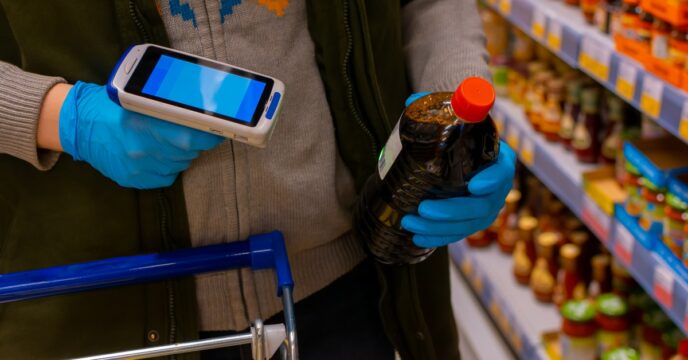
No, not Lays and Doritos stickers. These are stickers with a built-in RFID chip. They precisely measure which products are picked up and whether or not they are scanned. This newer security technique from technology company Nedap works as follows: every supermarket product has a unique sticker with a serial number. The chip in the sticker knows exactly where the product is in the supermarket. That includes when the product is near a self-checkout. Another sensor identifies which customer the product belongs to. If a customer has several products and not everything is scanned, the system sends a signal to the store employee. They can then intervene in time. A smart solution, but also very labor-intensive. And quite expensive. At present, Nedap is running one pilot with this system at a Dutch store.
To invest or not?
Only when several (large) supermarkets want to use a security technique in their stores, such as Nedap’s RFID chip, can the technology be rolled out widely. For now, many supermarkets are still in the experimental phase. You may never know whether your supermarket has a security technique in place—and, if so, which one. But consider yourself warned.
Oh, and have you also noticed that during self-checkout checks at Albert Heijn, they suddenly check not 4 products but 11? That is another way of combating shoplifting.
Also read:
- 10 things you didn’t know about the supermarket
- Why some people should not be allowed to use a self-checkout
- Complainers are going crazy over self-checkouts (and the checks)
Image: Albert Heijn, source: RTL Nieuws


