


Q&A with Sander Louwerens
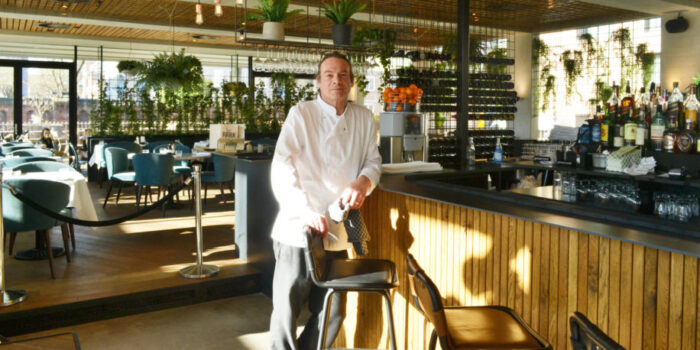
Sander Louwerens owned restaurant Lof for twenty years and then ran Citroën on Amsterdam’s Stadionplein together with Niels Wouters of De Goudfazant. After a period of freelancing, Sander now works full-time as head chef at PARK restaurant in Hotel Arena. On a beautiful winter’s day, we visited the restaurant in the sun-drenched Oosterpark and asked Sander a few questions.

Freelancing in the hospitality industry. Explain?
After working for myself all those years, I really didn’t feel like working for someone else anymore. You see more and more self-employed people in this industry these days. There is a great demand for chefs and, as a freelancer, you can decide for yourself where and when you want to work; you are in control, and that’s nice.
But now you are employed after all.
Yes, but by someone I really like and who gives me plenty of freedom. I’ve known owner Paul Hermanides for a very long time. During our many terrace visits, we often talked about the kitchen at PARK. We agreed that something had to change, and Paul thought I should come and do it myself.
What is the biggest change you have made?
I made the menu much more accessible, so that everyone feels welcome to sit down here. From walkers to businesspeople: the park belongs to everyone, so restaurant PARK does too. We have good croquettes, a homemade hamburger and fantastic house-made sauces.
From béarnaise to ravigote: all the sauces in a row
What do you think of chefs who refuse to put certain things on the menu on principle?
Maybe it’s because I’m getting a little older, but I don’t think I can tell people what they may or may not eat. PARK isn’t that kind of restaurant anyway. The restaurant is also part of Hotel Arena, and there needs to be a broad, appealing offering for guests from all over the world.
But how do you set yourself apart, then?
By working with fresh products and making as much as possible ourselves. Think of a simple meatball, but one that has been freshly rolled in-house. Or satay made with good meat in a fantastic marinade. Preferably grilled over charcoal. At the moment, our signature PARK burger is a huge success in particular. Some people turn their noses up at dishes like that, but I believe in the power of simplicity. The evening restaurant does have some more elaborate dishes on the menu, such as wonton with prawns and lobster or guinea fowl with sauerkraut carbonara.
What is your attitude toward food trends?
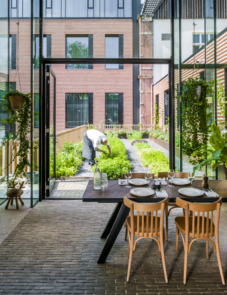
I stay far away from them. I love cooking good food, and I don’t care how it’s done. Personally, I like cooking with whatever is available. I’m not going to serve skate if it isn’t in season, but that seems logical to me. In my view, that also includes nose-to-tail cooking: making optimal use of the products you have at hand. I also like picking my own herbs, because it makes no sense to bring things in from far away when you can find them nearby. My pride and joy is therefore the herb garden at PARK, where the first wild garlic is already starting to appear. At the moment, for example, skrei is on our menu. If it’s no longer available next week, I’ll take it off the menu. In short: I cook with what’s available, but perhaps that’s actually very trendy again—to simply remain yourself.
Very profound. One more thought-provoking question: what can we always wake you up for?
I don’t have to think about that for very long. I love foie gras and truffle. They are wonderful products and are best enjoyed in their purest form.
Where have you eaten the best?
I’m very critical, so I’m not easily satisfied. But I remember everything. And, strangely enough, my most special dining experience wasn’t a truffle dinner. I was on holiday in Italy and, in the middle of the woods, came across a small, rustic locanda. I was hungry and asked whether they could make something for me. Wonderful dishes appeared on the table. Full of flavour and straight from the farm. Everything from polenta to cheese and freshly made ravioli. Further down the road, an old lady caught a few chickens and wrung their necks. I could guess what would be on the menu the next day.
And what do you think of upscale restaurants?
I do go to those kinds of places, of course, but all that fiddly food isn’t really for me. You spend an entire evening working your way through 23 courses, with all the trimmings. I think it’s very impressive, but afterwards I only remember a few dishes. On top of that, I’m rarely impressed by the value for money. You pay a great deal, and I think you should be able to expect a great deal in return. Unfortunately, I don’t always feel I get value for my money on an evening like that.
Where do you prefer to go out to eat?
At La perla and Japanese eatery Tanuki on Gelderlandplein. I’m especially fond of the latter. It looks terrible, but the food is very good. You essentially eat the same kind of food as at Yamazato, but it’s a little less refined, three times cheaper and at least as delicious.
Want to eat Japanese food at home? Get these ingredients in your kitchen.
And if you’re cooking yourself, what do you consider an essential kitchen tool?
Nothing, really. It’s all in your head, not in your equipment. All those kitchen gadgets are nice, but you can do without them too. They aren’t crucial to making a beautiful dish. I used to dry my sausages in a homemade wine cabinet. I admit that those appliances make life easier, but sometimes it’s also great to return to basics.


