


Recipe: Confit duck leg with lentils
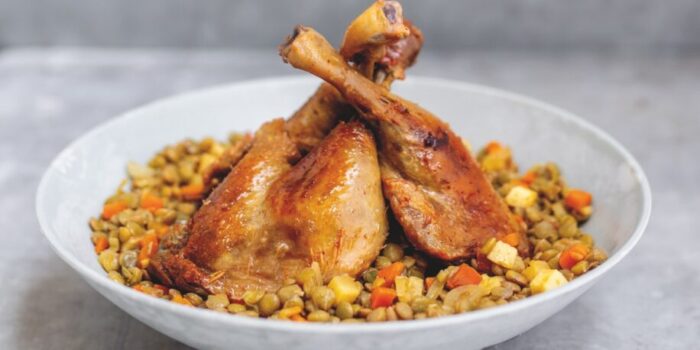
Confit is cooking in fat at a very low temperature. The perfect way to prepare duck legs. It makes the meat incredibly tender and gives it a deliciously rich flavor.

How to make confit duck leg with lentils
- Rub the legs generously with coarse sea salt. Cover and refrigerate for at least 24 hours (this is called dry brining).
- Rub the salt off the legs with a tea towel and pat them thoroughly dry. Melt the goose or duck fat in a pan over low heat. Place the legs in the fat. The legs must be completely submerged. Add the bay leaf, thyme and garlic to the pan, place the lid on halfway and cook the legs for at least 3 hours (longer is fine too) over low heat. The fat may move, but should not bubble constantly. If necessary, use a warming plate to moderate the heat. The meat is done when it almost falls off the bone.
- Meanwhile, for the lentils, sauté the onion and garlic in a little olive oil until lightly browned and soft. Add the carrot, leek, celeriac and tomatoes and stew for 10 minutes. Now add the lentils and stock and bring to a boil. Cover the pan with a lid and cook the lentils until tender (according to the package instructions) in 30–45 minutes. Note: the lentils should not fall apart, but retain a juicy bite.
- Remove the cooked legs from the fat. Fry the legs in a frying pan with two tablespoons of the fat used, over medium-high heat, for 8 minutes until crisp.
Tip
After cooking, let the duck cool, submerged in the hot fat, in a clean preserving jar or covered bowl. Covered in the solidified fat, the legs will keep for at least four months in the refrigerator. You can reheat and reuse the solidified fat.
Wine tip
What are we drinking with this? An organic Rhône wine called Artésis Rouge, made from a blend of three grapes: grenache, syrah and mourvèdre. Connoisseurs simply call it a ‘GSM blend’. They do that to impress you, but you won’t fall for it anymore. This delicious trio complements each other seamlessly: grenache is the king—powerful, juicy and flavorful. But kings have their flaws too, in this case a thin skin containing barely any pigment. That is why the darker, sun-loving mourvèdre and the fruitier, peppery and powerful syrah are blended in as well. The result is a wonderfully soft and full-bodied dark red wine, packed with dark fruit such as blackberries and cherries. A wine to go wild for, especially with this wild dish. Santé!
Read also:


