



Recipe: Haggis – if you dare
One of the most surprising cookbooks (to cook from and to read!) in recent times: Pride and Pudding, in which Regula Ysewijn takes you on a journey through the fascinating culinary history of Great Britain. Be inspired by the pride of British cuisine: from sweet puddings to centuries-old savoury puddings, such as Scottish haggis!

Haggis may well be one of Great Britain’s most famous puddings. And although the Scots have adopted it as their national dish, it is actually not really Scottish in origin. The first recipe to appear in Scotland dates back to the end of the eighteenth century, which is three hundred years later than its first mention in an English text.
Made from sheep’s stomach
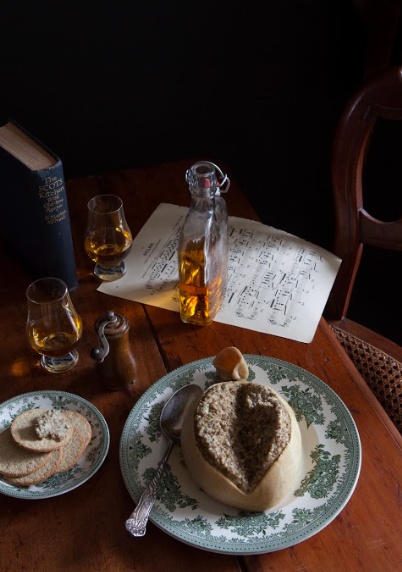
Haggis is a savoury pudding made from a sheep’s stomach, filled with the finely chopped heart, liver and lungs of a lamb or sheep, onions, oatmeal, suet, spices and herbs. It looks rather like a large sausage that is boiled and then often toasted over the fire. The word ‘haggis’ was first mentioned in Walter of Bibbesworth’s Treatise from the thirteenth century, written in verse to help a mother teach Anglo-Norman French to her children. The oldest recipe for haggis can be found in a manuscript from 1430 and is also written in verse. But such puddings had already existed for decades, even centuries. The Romans had recipes for a stuffed sow’s womb, and the ancient Greeks ate roasted stuffed sheep’s stomachs.
Deep-fried and as a pizza topping
But dishes that we could categorise as haggis also existed, and still exist, throughout the rest of Europe and even farther afield. Lungemos from Norway, pölsa from Sweden, ghammeh from Lebanon and slátur from Iceland, for example, are very similar to haggis. Today, haggis exists in various regional varieties, but you can also find it deep-fried, as a pizza topping, in croquettes, burgers and many other unusual and creative fusions. The Scots continue to hold this dish, which has become such a major part of their culture, in high regard and have carried it into the twenty-first century. Scottish friends tell me that they usually buy their haggis instead of preparing it at home with fresh ingredients. Do you have the guts? If you would rather not use a stomach, you can buy a large ox bung (the caecum of an ox) online, or make a casing from heat-resistant cling film!”
How to make Haggis
(The ingredients are based on 2 large haggis puddings or 3 smaller ones. A large quantity serves 6 people as a main course, or more if you serve it as a starter or snack on oatcakes.)
- Soak the stomach or ox bung overnight in salted water, or prepare cling film.
- Rinse the offal, place it in a saucepan, cover it with water and bring it to the boil. Simmer gently for 1 hour. Leave it to cool and weigh the meat.
- Put the offal, chopped onions, herbs, pepper and salt in the large bowl of a food processor. Chop it into fine grains. Taste to see whether it needs more pepper and salt.
- Mix the shredded suet, oatmeal and beaten eggs into the crumbs. The mixture will still look fairly dry, but that is how it should be.
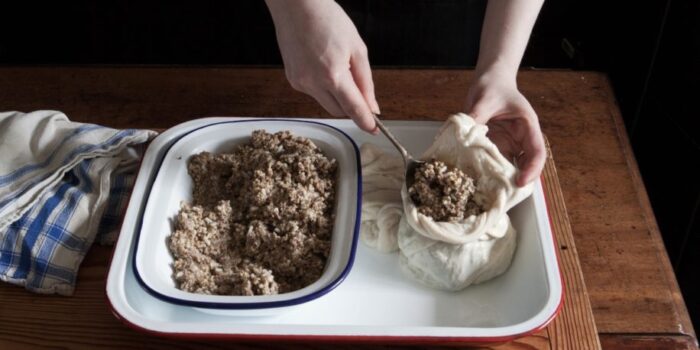
- Fill the stomach, ox bung or cling film. Tie the pudding closed, but not too tightly, as the pudding will expand somewhat.
- Bring a large pan of water to the boil, turn the heat down and submerge the haggis. Tie the pudding to the pot so that it does not touch the bottom of the pan.
- Simmer for 2 hours if you are cooking 3 smaller pieces, or 3 hours for 2 large ones.
- In Scotland, a haggis is called ‘the beast’ and you have to keep an eye on it. It is very important to prick holes in the haggis with a sharp needle every 10 minutes; otherwise it will burst. So keep your eyes on the beast!
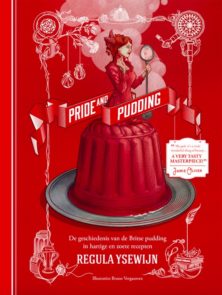
Title: Pride and Pudding
Author: Regula Ysewijn
Price: €31.99
Publisher: Carrera Culinar
Read also:


