


Recipe: Hot cross buns
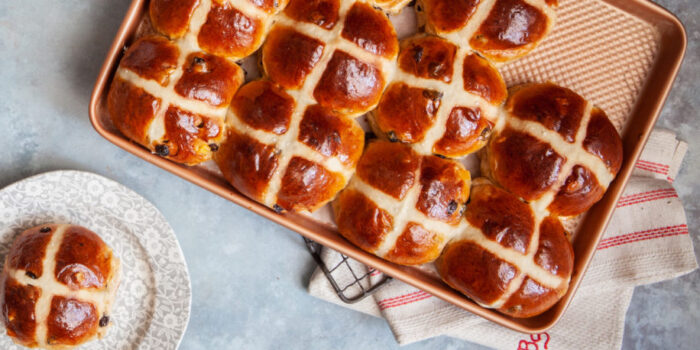
Hot cross buns have a rich history: from Christian to pagan and subsequently as a symbol of superstition. Buns baked on Good Friday were said not to spoil for the rest of the year. And sometimes the buns were taken aboard ships because people were convinced they could prevent shipwrecks.

In the British baking book, Regula Ysewijn writes about this: ‘In London’s East End you’ll find a pub called The Widows Son, named after a widow who lived in a cottage on the site in the 1820s. The widow baked Hot cross buns for her sailor son, who was expected to return home from sea on Good Friday.
Good Friday
He must have died at sea, but the widow refused to give up hope of his return and continued to bake a hot Hot cross bun for him every year, which she then kept with the buns she had baked in previous years.’
‘Since 1848, there has been a pub on the site of the widow’s cottage and to this day, every Good Friday, the ceremony of the Widow’s bun is celebrated and members of the Royal Navy come to the pub that was named The Widows Son to place a new Hot cross bun in a net above the bar. Remember, buns baked on Good Friday will not spoil.’
Preparation
- Heat the milk until it is lukewarm but not hot. Add the yeast and leave it to activate. Put the flour, sugar and spices in a large bowl or the bowl of your mixer, combine and place the butter on top in pieces. Pour half of the milk with yeast over the butter and begin mixing. When the milk and butter have been fully incorporated, add the other half along with the egg.
- Knead for 5 minutes, then leave to rest for a few minutes. Add the currants and salt and knead for 10 minutes until all the dough has come together into a smooth dough that is not too dry.
- Cover the dough and leave it to rest for 1 hour, until it has doubled in volume.
- Meanwhile, line a baking tray with baking paper, mix the water and flour into a thick batter for the crosses and spoon it into a piping bag with a small nozzle, which you cover until needed.
- When the dough has risen, knead it briefly and divide it into 12 equal pieces. Take a piece of dough and flatten it slightly on your work surface, pull the outer parts inwards like a purse and pinch them together neatly so they cannot open during rising. If you turn the ball over now, the top should be nice and smooth; if not, correct it or start again.
- Place on the baking tray and continue with the other buns. Then cover the baking tray with the balls with a light cotton cloth, wrap it in plastic wrap and leave to rise for 1 hour or until the balls have doubled in size. Preheat your oven to 210 °C.
- When the buns have risen, brush them with the egg-and-milk mixture and carefully pipe the cross onto each bun using the piping bag and the mixture you prepared earlier.
- Bake the buns in the centre of the oven for 20-30 minutes, until golden brown.
Tip: The next day, they can easily be reheated for a few minutes in a hot oven. You can easily freeze these buns, defrost them on the day itself and warm them briefly in a hot oven.
Image: Regula Ysewijn
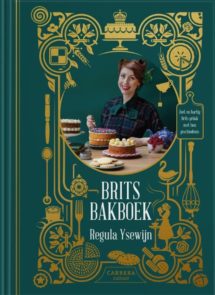
Title: British Baking Book
Author: Regula Ysewijn
Price: €31,99
Publisher: Carrera Culinair
Read also:


