



Recipe: roasted duck
From steaming noodle soup to crispy bánh mì: in The Bible of Vietnamese Cuisine, Mai Nguyen shows why Vietnamese food is so addictively delicious. Fresh, sour, sweet and savoury come together in dishes packed with flavour, with influences from China, France and neighbouring countries such as Thailand and Cambodia. Whether you like chewy, crunchy or spicy – this cuisine has it all.

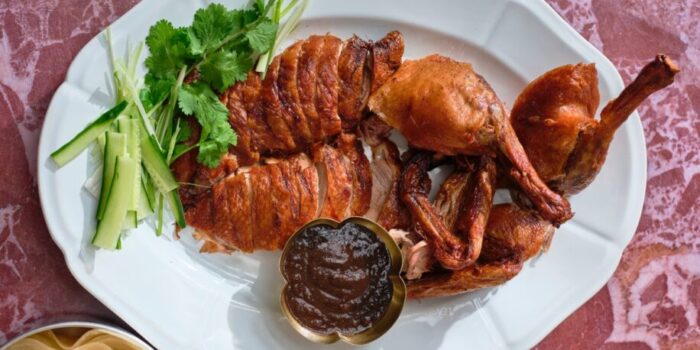
In Vietnam, you’ll come across two names for roasted duck. Vịt quay is similar to Peking duck. Traditionally, this duck is grilled in a closed earthenware pot, which distributes the heat evenly and cooks the meat uniformly. Nowadays, it is prepared over an open fire, with a whole duck threaded onto a spit and roasted. The word ‘quay’ means ‘to turn’, after all. The duck skin should be crisp, and the dish is served with thin pancakes, finely sliced spring onion, cucumber strips and hoisin dipping sauce. Incredibly delicious!
On a barbecue or in an oven
With vịt nuớng, the duck is roasted on a barbecue or in an oven. The meat is fragrant and rich in flavour because it is marinated with robust spices. These are the ducks you see hanging in restaurants. The duck is cut into bite-sized pieces and served over rice or egg noodles with soy sauce. This recipe combines the best of both cooking methods: a fragrant duck with crispy skin. Start this recipe a day in advance.
How to make roasted duck
- Grind the dried red yeast finely in a mortar. In a large bowl, mix the finely ground yeast with 2 tablespoons of seasoned wine, the ginger, five-spice powder, chicken stock powder, salt, brown sugar, black pepper, hoisin sauce, dark soy sauce, light soy sauce and oyster sauce.
- Pour half of the marinade into the duck’s cavity. Place 3 garlic cloves and the spring onions in the cavity and seal it well with cocktail sticks or satay skewers.
- Line the oven tray with aluminium foil and place the oven rack on top. Set aside.
- In a wok, bring 1 litre of water with the remaining 3 garlic cloves, the remaining seasoned wine, cinnamon, star anise, cloves, apple cider vinegar and honey to a boil over high heat. Then lower the heat.
- Hold the duck firmly by the neck skin and keep it upright above the steaming cooking water. Use a ladle to pour the cooking water over the duck. Repeat all around, pouring over each side at least ten times, until the duck’s skin is glossy and taut on all sides.
- Place the duck breast-side up on the oven rack. Refrigerate the uncovered duck for at least 12 hours so the skin dries thoroughly. After drying, the skin should no longer stick to your finger when you press it.
- Strain the spiced water, let it cool and freeze it for next time.
- Preheat the oven to 180 °C.
- Now place the duck breast-side down on the oven rack. Slide the tray into the centre of the oven and roast the duck for about 40 minutes. Turn the duck over and roast for 1 hour until crisp and cooked through. Remove the duck from the oven and let it rest for 20 minutes.
- Cut off the duck’s tail and discard it. Collect the juices from the duck in a bowl. Remove the fat floating on top, then mix everything with the hoisin dipping sauce for extra flavour.
- Where possible, cut the duck meat into strips 1 centimetre thick. Pull the rest into pieces with your fingers.
- Serve the duck with the Peking duck wrappers, spring onion oil, cucumber, spring onions and coriander. Divide the hoisin dipping sauce among small bowls. Take a Peking duck wrapper and place a few strips of duck on it. Then add a little spring onion oil and some cucumber, spring onion and coriander. Roll up and dip into the hoisin dipping sauce.


