


Recipe: Super Juicy Guinea Fowl in a Salt Crust
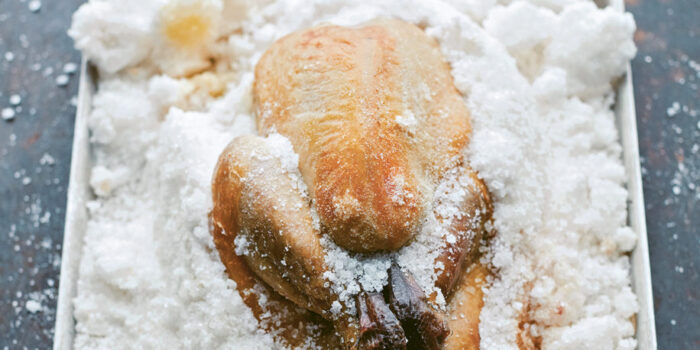
Chicken in a salt crust is one of my go-to dishes when I have people over. Guaranteed success and incredibly simple to make. In the book Provence, Alex Jackson takes it a step further: instead of chicken, he uses guinea fowl.

Alex Jackson: ‘I have always struggled with guinea fowl. The meat is on the dry side, while that promised gamey flavor never really seems to come to life. I thought back to a delicious lamb shoulder baked in sea salt at ‘that fancy restaurant in Paris’ – pink and juicy, yet so tender that the meat fell off the bone – and guinea fowl seemed extremely well suited to the same treatment. Bingo! The bird emerged juicy and delicious from its salty cocoon: steamed and roasted at the same time, seasoned, but not too much. The recipe turns out to be very simple. The only possible drawback is that you spill salt all over your kitchen floor. You need a lot of salt, so buy a large bag. This method also works very well with chicken.’
How to make it
1. Preheat the oven to 220 °C.
2. Stuff the guinea fowl with the thyme, garlic and lemon. Place a small circle of aluminum foil over the opening to prevent the salt crust from getting inside. Sprinkle with black pepper (no salt!) and set aside.
3. Add both types of salt to a large bowl. Moisten the salt with a little water so that it becomes kneadable, like wet sand. Fill a deep oven dish with a 1 cm layer of salt. Place the guinea fowl on top. Cover the guinea fowl with the remaining salt, making sure there is a 1 cm layer of salt on all sides.
4. Bake in the oven for 40 minutes.
5. Meanwhile, make a gravy. Roast the giblets and wing tips in the oven until golden brown. Deglaze the oven dish or roasting pan with the chicken stock or water, add the remaining ingredients (except the butter and salt) and simmer gently for about half an hour, until the guinea fowl is ready. Pour the gravy through a sieve into a small pan and reduce quickly by half. Add a little salt to taste, but not too much: you will add some of the savory roasting juices later.
6. Check whether the guinea fowl is cooked: push a skewer through the salt crust into the meat; aim for the thickest part of the thigh as close to the bone as possible. If the skewer feels hot, the guinea fowl is ready. If the skewer is only warm, leave the bird in the oven for another 5 or 10 minutes. This is the trickiest stage: it is difficult to check whether the bird is cooked because you cannot see which part you are inserting the skewer into through the salt crust. The good news is that the bird can hardly become dry, because all the moisture remains in the crust. A digital meat thermometer is the solution (it should read 70 °C).
7. Once you are convinced that the guinea fowl is cooked, remove it from the oven and let it rest in the salt crust for about 10 minutes. This is a good moment to put it somewhere prominent to show how clever you are.
8. Just before serving, break the salt crust with a pestle, hammer, baseball bat or something similar to remove hard pieces of salt, and brush away loose salt like an archaeologist. Set aside while you finish the gravy.
Bring the gravy gently to the boil, add the juices that have collected underneath the resting bird and whisk in a few cubes of cold butter. Adjust the seasoning if necessary – it should not be too salty – and keep warm.
9. Cut the guinea fowl into pieces and pour the sauce over it.
10. This dish needs nothing more than simply cooked spinach drizzled with olive oil and lemon juice. But it is also delicious with a handful of fried chanterelles and a light cream sauce (make a very light roux, add chicken stock and some cream and simmer gently). Other options include mayonnaise mixed with some chopped fine herbs and a little mustard, boiled new potatoes, buttered runner beans, a green sauce with anchovies and capers, a sauce made from bread soaked in tarragon and boiled egg, some raw sauerkraut, etc.

Title: Provence
Author: Alex Jackson
Publisher: Good Cook
Price: €25,95
Read also:


