



Remarkable: culinary schools advise against internships at vegetable restaurant De Nieuwe Winkel**
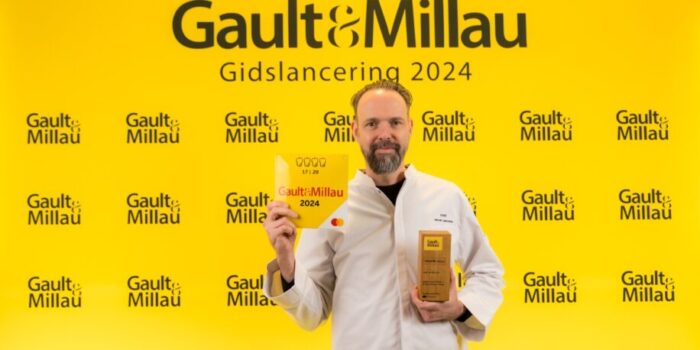
Interning at De Nieuwe Winkel** in Nijmegen is a dream for many trainee chefs. The vegetable restaurant has been voted the Best Plant-Based Restaurant in the World several times (in 2022 and 2023)! It is a great honor to be allowed a glimpse behind the scenes there. Yet that dream falls apart for many trainee chefs. After all, far from all culinary schools give permission for an internship at De Nieuwe Winkel.

The reason? At De Nieuwe Winkel, they do not work with meat or fish. (Otherwise, that world title would be a little misplaced too.) Many schools do require their students to have knowledge and skills related to (preparing) meat and fish. That is part of their curriculum. This is not possible at De Nieuwe Winkel, so the internship does not go ahead for many students.
Conservative
Remarkable. Students from all over the world apply for a coveted internship at De Nieuwe Winkel, with many receiving a rejection letter. There are simply more applications than places. It is quite frustrating if you are a Dutch trainee chef who is accepted as an intern by De Nieuwe Winkel, but is not allowed to go by your own school. Chef and owner of De Nieuwe Winkel Emile van der Staak, who was recently also named ‘Chef of the Year 2024’ by restaurant guide Gault&Millau, calls the attitude of Dutch culinary schools ”conservative”. At least, that is what he told hospitality trade magazine Misset Horeca.
Van der Staak believes that ”the hospitality industry should take a pioneering role when it comes to ingredient use and the impact on the environment”. Moreover, he says, students can often acquire meat and fish skills at an earlier stage of their education. Interning at a vegetable restaurant should therefore be perfectly possible, even though meat and fish are not covered.
Cas Spijkers Academy
One of the schools that advises against De Nieuwe Winkel as an internship placement is the Cas Spijkers Academy. Chef Van der Staak received two rejected students as a result. The academy itself says in a response to Misset Horeca, however, that it only gives students advice. Marc Meulenbelt of the Cas Spijkers Academy tells Misset Horeca that they look at ”experience, previous restaurants where they have worked and any educational matters that play a role in this. And yes, that could also be a vegetarian or vegan restaurant”.
Not popular
At many culinary schools, the vegetarian, vegan or plant-based aspect is (still) not popular. Educational institution De Rooi Pannen, for example, has incorporated a vegan module into its curriculum, but apparently neither teachers nor students are enthusiastic about it. De Rooi Pannen does offer opportunities (a Vegan elective is also being introduced), but there are certainly schools that are not really keen to make a change. They cling to the old ‘French’ approach, in which meat and fish are invariably part of the curriculum. This is despite Dutch Cuisine—in other words, 80% plant-based and 20% meat/fish—becoming increasingly popular. Several well-known chefs are ambassadors for Dutch Cuisine. Besides Emile van der Staak, this includes Jonnie Boer of De Librije***.
Plant Based exam
Are the doubts and negative advice from culinary schools and culinary academies justified? Do students really miss out on something in their development if they choose a vegetarian or vegan restaurant as their workplace? Stichting Vakbekwaamheid Horeca (SVH) believes that students should absolutely be able to choose plant-based restaurants, as they say in a response to Misset Horeca. The important thing is that the school assignments must be able to be completed at the appropriate level. If you are following a broad basic course, then ”it is conceivable that a vegan restaurant cannot offer this foundation across the board because of its specialized focus”, according to SVH director Ricardo Eshuis.
If you would like to enter the professional plant-based kitchen, SVH’s Plant Based exam is a great starting point. Kookstudio Thorn is the first to offer a course in which you can take this exam. You learn the ins and outs of the vegetarian culinary profession, including dairy alternatives, working with umami and creating vegetarian and vegan menus. These are just some of the course components. Very interesting. And so there is still hope for students who want to enter the vegetarian and vegan restaurant world. Let us hope that in the future they will still be able to fulfill their dream at De Nieuwe Winkel.
Read also:
- These are the most important lessons I learned while working in professional kitchens
- 15 eye-catchers: bizarre artworks made of food with little eyes
- Really: all these products are vegan
Source: Misset Horeca, image: Gault&Millau/Nino Brouwers


