



Stock your Thai pantry like this
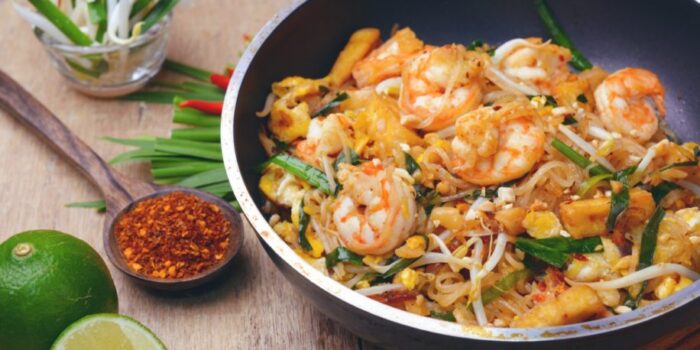
Diving into a new cuisine can be overwhelming. Recipes call for spices you don’t have at home, or combine ingredients in ways you’re not used to. Once you’ve got the perfect pantry sorted, you’ll be whipping up new recipes with ease. FavorFlav is happy to help you get started with the basic ingredients for each cuisine; this time, Thailand is up.

The fact that so many people go on holiday to Thailand is certainly also due to the lovely weather and beautiful islands. But for us, the food is the deciding reason to board a plane to Bangkok. What do you need to put a delicious pad thai, penang curry, yam or laab on the table yourself? We’ve put together a list of essential ingredients.
Fish sauce
Many Thai dishes are packed with umami. One of the ingredients responsible for that is fish sauce (nam pla). The sauce is made from salted, fermented fish or shrimp. It has a strong smell (okay, fine, it just stinks), but an unmatched, subtle salty flavor. It’s used instead of salt in dressings, marinades, curries, soups and stews.
Coconut milk
Curious about the secret behind creamy curries, soups and desserts? Coconut milk. The popular soup tom kha kai and penang curry would be nowhere without that creamy substance.
Chili peppers
Lots of fresh chilis in all shapes and sizes, including Thai bird’s eye peppers. These super-hot little red and green peppers are used in spicy dishes such as papaya salad. Green cayenne peppers and dried red chilis also often go into salads, soups and curries.
Tamarind
Tamarind is a somewhat lesser-known ingredient that is widely used in sweet-and-sour dishes such as the mild, slightly sour massaman curry or tom yum soup. It’s available as a sticky paste, pressed into blocks or as a syrup. The tamarind fruit grows on a tree, is brownish-red in color and tastes sour and fruity.
Dried shrimp
Besides fish sauce, there’s another ingredient that adds an intense umami flavor: dried shrimp. Available in paste form, but also whole or pounded into a salty crunch to sprinkle over, for example, the number-one most-ordered street food dish, pad thai.
Thai basil, mint, cilantro
Fresh herbs such as Thai basil are a must. This herb resembles regular basil, but has slightly narrower purple-green leaves and a sweet, anise-like flavor. Other commonly used herbs include fresh mint, for example in laab (a lukewarm salad of finely chopped chicken or pork with mint), and cilantro, a basic ingredient in virtually all curry pastes.
Sticky rice
Rice, rice and more rice. Besides fluffy white rice, they’re also crazy about sticky rice. A long-grain rice variety that’s slightly sweet and chewy. Popular in street food dishes such as grilled fried chicken with sticky rice, but also in desserts such as mango sticky rice.
Lemongrass, ginger and galangal
How do you get a fresh, spicy flavor? By making generous use of ingredients that have exactly those two qualities. Think: lemongrass, ginger and galangal. Galangal is related to ginger, but is slightly more aromatic and less sharp in flavor. It’s used sliced or grated.
Lime and lime leaves
A typical Thai citrus fruit is the kaffir lime. It’s small and knobbly, dark green in color and highly aromatic. If you can’t find this variety at the Asian grocery store, you can also use regular lime. The leaves of the kaffir lime are also used to flavor dishes, dried or fresh. Just like bay leaves, you can leave them whole in the pan while the dish simmers or stews and remove them at the end.
Fresh green peppercorns
You may have tasted these little balls when taking a bite of green curry: fresh green peppercorns. These small, round peppers are the unripe berries of the tropical pepper plant (piper nigrum). They grow in clusters and are sold that way in Asian supermarkets. The flavor is fresher than black pepper, with a slightly sour undertone.
Also read:


