


Tested: pesto without olive oil
googletag.pubads().definePassback(‘/4217/3rdparty/favorflav.nl’, [1, 1]).setTargeting(‘campaign’, [‘2018021210’]).display();

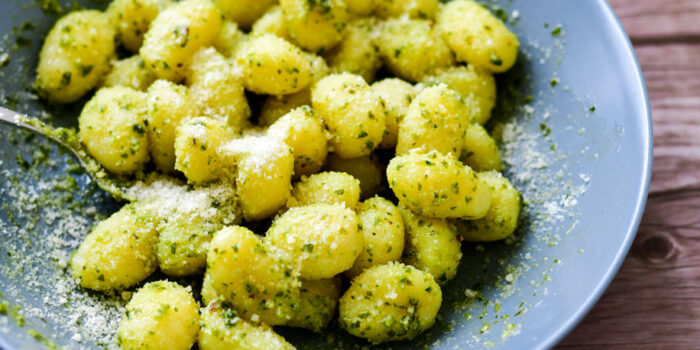
Classic basil pesto from Liguria consists of pine nuts, garlic, basil, salt, Parmesan cheese and/or Pecorino Romano, and olive oil. But what do you do when you’ve run out of olive oil? Or when you feel like trying something new? Then you simply start testing, right?
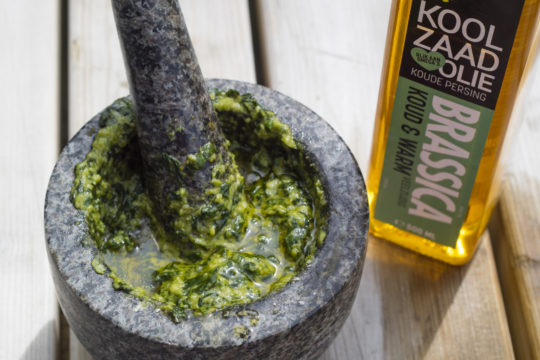
Well, that’s exactly what I did. With rapeseed oil, to be precise, because I did have that at home and its mild, nutty flavor seemed like a fine substitute to me. You could call that blasphemy in the Italian olive oil church, or simply adventurous, healthy, and green. Because hey: the pure rapeseed oil from Brassica is packed with omega-3 (= super healthy) and is produced in the Netherlands—hello, environment!
Besides: cooking is really mostly just trial, error and (above all) succeed. Well, this rapeseed oil pesto recipe was a definite success. Through pasta, in a salad, over chicken or fish: all delicious.
Different varieties
For this recipe, I used ‘Brassica Versatile’. It can be used in both hot and cold dishes, making it ideal for sauces such as pesto. Brassica also has the ‘Butter Flavor’ variety, for—just as the name suggests—a buttery taste when cooking and baking (while still being 100% natural), and ‘Baking & Roasting’, which can be heated to 240 degrees and can therefore also be used for deep-frying. Party!
In a mortar
Anyway, let’s start with that pesto. I really do recommend using a mortar. A food processor is of course nice and easy, but pesto pounded in a mortar is so much creamier, coarser in texture, and far more aromatic. Believe me, you want that.
How to make pesto with rapeseed oil
Toast the pine nuts, then crush them finely together with the garlic in the mortar.
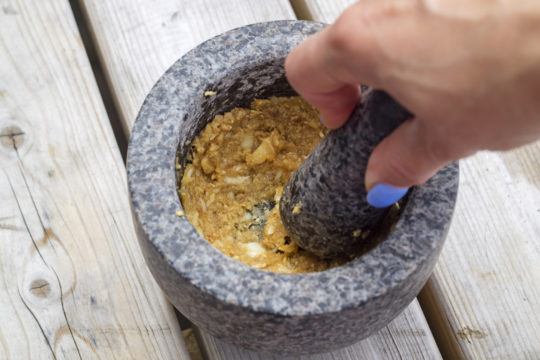
Once it has become a paste-like mixture, continue with the next ingredient: the basil. Add a handful of basil to the mortar at a time, grind it, and add another handful until all the basil has been ground.
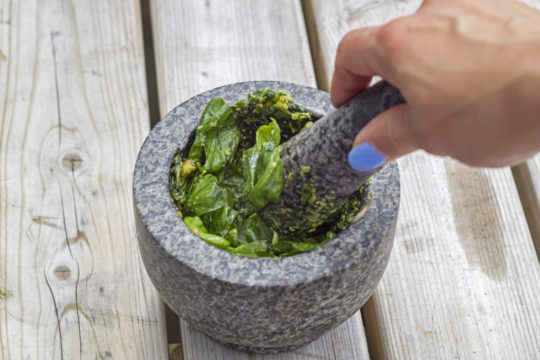
Also add a pinch of coarse sea salt. Not too much, because once the natural oils are released, you’ll be adding cheese as well.
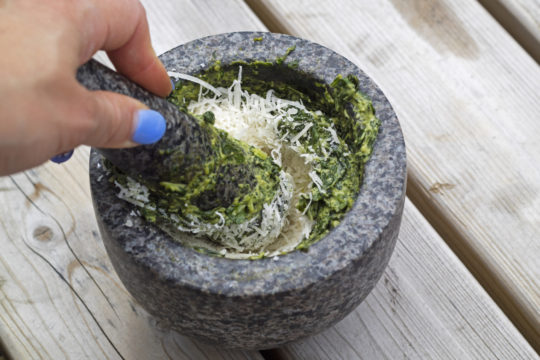
Stir briefly, then immediately continue with the rapeseed oil. Add it little by little so you can gently mix it with the rest and it doesn’t spill over the edges of your mortar. Let the pesto sit for a few minutes, then taste it to see whether it needs more garlic, salt, cheese, or oil. Season the pesto to taste if necessary.
Stirring the pesto through pasta? Don’t heat it too much. The oxidation of the basil can quickly turn the pesto dark and gray, which would be a shame considering that fresh green color.
This article was created in collaboration with Brassica rapeseed oil.
Also read:


