The Dutch Cuisine Explained
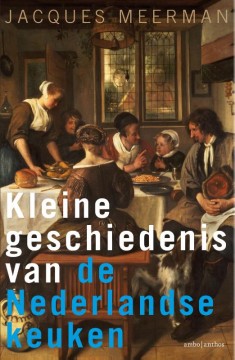
Does it exist or not? That is always the question among foodies. And we’re not talking about Santa Claus, but about Dutch Cuisine. Everyone has an opinion on it. Jacques Meerman provides a fairly definitive answer in his A Brief History of Dutch Cuisine. Oops, spoiler!

Cookbook translator and author Jacques Meerman keeps the reader in suspense for pages on end. Because every time they think: Dutch Cuisine, it does exist, Meerman gives it a historical twist that makes everything turn out to be slightly different from how it seems at first glance. More complicated, too.
Meerman uses the Great Events of history to clarify developments in our food and cuisine. Wars, technology, trade, agriculture, voyages of discovery, science, emancipation… All those factors that still determine how, what, where and when we eat today. And whether or not there is such a thing as a cuisine of our own.
Spinach
Because no people has lived—and continues to live—for centuries without outside influences, it is not so easy to indicate where one cuisine ends and another begins. Certainly not when you are talking about an area that was constantly influenced by other peoples and cultures. Such as the Netherlands, which only acquired an official independent status in 1830, and in fact in 1848.
The beauty of it is that a cuisine is shaped precisely by all influences, both internal and external.
This followed domination by the Romans, Charlemagne and the Arabs. According to Meerman, the Romans left behind few eating habits and ingredients, but the first Arab vegetable, spinach, was already being sold in Utrecht in the fourteenth century. And because spinach is highly perishable, the leafy green must already have been cultivated in the Utrecht area at that time.
Botanical garden
The voyages of discovery also brought new influences and products. Sometimes such a culinary influence was only temporary, and certain ingredients or cooking methods disappeared again after decades, or even centuries. Sometimes they were more lasting.
In the sixteenth century, a botanical revolution got under way in the Netherlands that continued well into the seventeenth century. And in fact continues to this day. The University of Leiden, founded in 1575, established a botanical garden, the hortus botanicus, in the 1590s. Before long, its administrators had merchants bring back seeds, bulbs and plants from their distant travels.
From the Cape of Good Hope, Batavia and the Japanese island of Deshima, these were brought back to Leiden, where botanists such as Boerhaave became masters of breeding and acclimatizing such exotic crops, earning a reputation far beyond the national borders of the time. And that naturally also affected what appeared—and still appears—on Dutch plates.
Red ears
Meerman’s thorough, slightly academic, 438-page book, complete with historical recipes, is not meant to be read from cover to cover in one sitting in bed with flushed ears (well, why not, actually?). But it contains so much valuable historical background information that you can pick it up time and again and discover and/or look up something new about Dutch cuisine.
As for the cuisine itself, things are looking good. The beauty of it is that a cuisine is shaped precisely by all influences, both internal and external. It is neither static nor isolated. And it is never finished. In a hundred years or so, the next food writer could produce a lovely appendix to this book. And they will then face the challenge of making sense of the tsunami of cookbooks and apps from our present day.
A Brief History of Dutch Cuisine
Jacques Meerman
€ 29,99
Ambo/Anthos
Text: Marjan Ippel
Image: Ambo/Anthos Publishers